Do you trust your instincts?
Yes. If I get the feeling I should or shouldn’t do something, I pay attention. We have instincts for a reason. I think instincts contribute to survival. Animals don’t seem to question their instincts.


Do you trust your instincts?
Yes. If I get the feeling I should or shouldn’t do something, I pay attention. We have instincts for a reason. I think instincts contribute to survival. Animals don’t seem to question their instincts.
 Mother and I spent a few days in Haddonfield, New Jersey, visiting with friends and relatives on the occasion on her eighty-second birthday. Haddonfield is a wonderful place to visit. Everything is in walking distance. We walked miles seeing all the sights, restaurants, and shops. We took the opportunity to attend a meeting at the Friends Meeting on Sunday. I thought Mother understood how meetings worked. We filed in and took our places in the lovely old meeting house. Mother leaned over to whisper something as soon as we were seated. I gestured there was no talking, so Mother, a staunch Southern Baptist, sat waiting for the services to start. Worshipers sat quietly meditating as Mother looked increasingly puzzled. Finally, she let me know she was ready to leave after about twenty minutes. She had a little difficulty understanding no talking in church. That twenty minutes was the longest I’ve ever known her to go without talking.
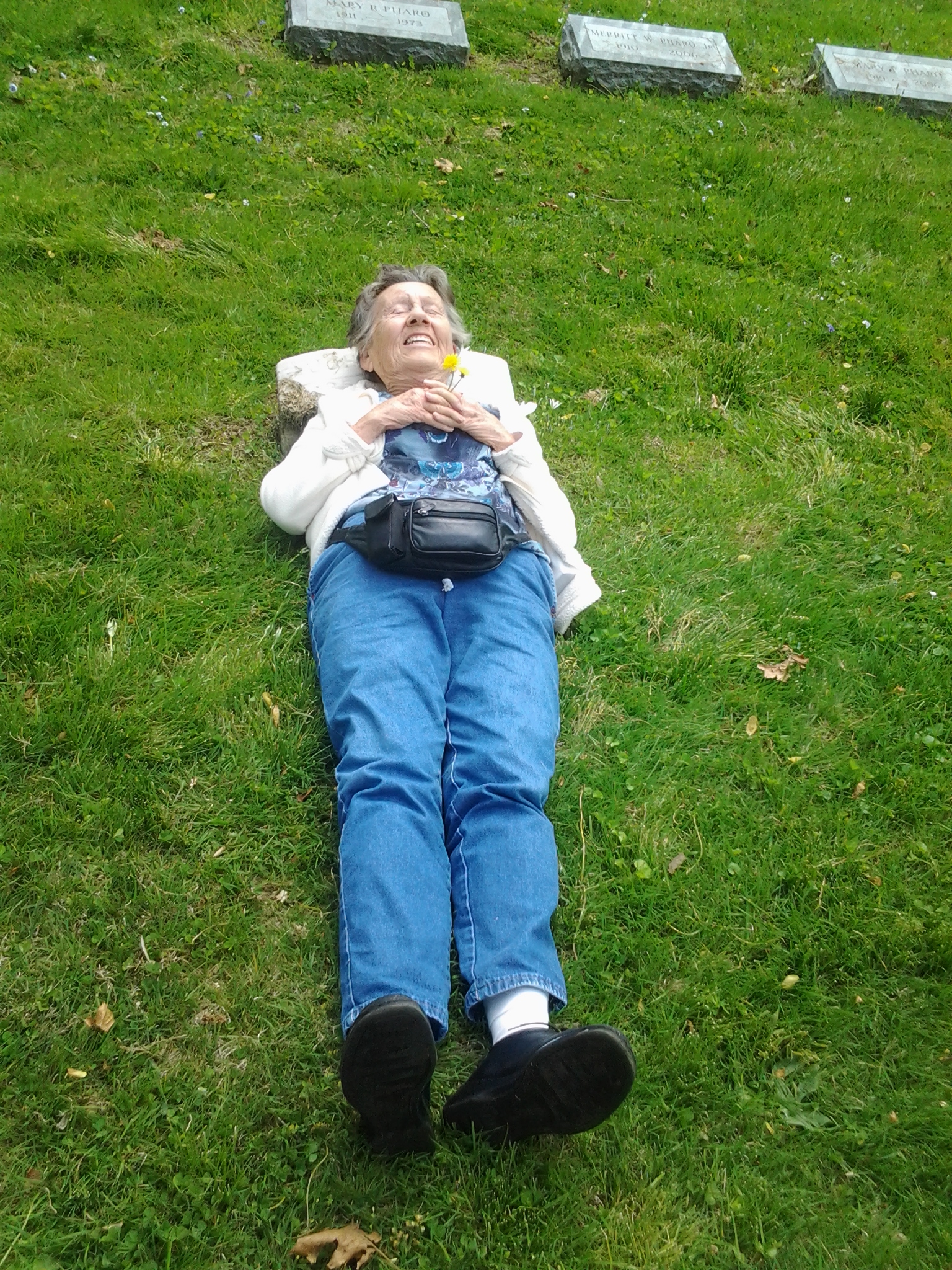
After the service, we took a peaceful stroll through a beautiful cemetery. Cemeteries can be so lovely, a place to reflect and spend a little time in meditation. The more we walked, the more Mother admired it. This one looked so good, she decided she might like to be buried there. She stretched out to see if it felt as enticing as it looked. I offered to check on immediate availability, but she decided she’d like to finish out the trip, but she is still considering.

https://atomic-temporary-73629786.wpcomstaging.com/2014/10/24/the-indian-princess-gets-hen-flogged/
Above see Mother’s original art and link to story she told little girl at tea party.
One afternoon, we walked down to a little tea-room for tea. A grandmother had taken her precious little four-year-old granddaughter there for birthday tea. Mother, the little miss, and her grandmother got into such an animated conversation, we ended up being invited to join them. Mother told the little girl a story from her own childhood and ending up buying the little one a special teacup. We all had a lovely time. We strolled home late in the afternoon full of the unexpected pleasures of the day.
When we got ready to go through security at the airport on the way home, I was chosen for expedited board and told to skip the security line. I explained to the attendant I was traveling with my eighty-two year old mother and couldn’t leave her unattended. Hearing that, Mother immediately switched into her daft mode. “Where are we going? I’m hungry. Where’s my kitty-cat?” Fearing a lengthy exchange with an Alzheimer’s sufferer, the attendant waved both of us on through. All the while, Mother was pulling on my sleeve wanting to know when she could eat and demanding her cat. (She doesn’t have one.) Her ruse worked, but I don’t know if it was worth it since she kept it up for a while since she was having such a good time with it.
I had requested a wheelchair meet us at the gate to get Mother through the airport quickly, not because she’s disabled, except for her extremely short legs. The wheelchair attendant whisked her through in record time. When we got to the gate, Mother gave her a dollar and a heartfelt thank you. I slipped her a five behind Mother’s back. She’d earned it!
video on YouTube. https://www.youtube.com/watch?v=blq9f8NSkCkCut and paste into your browser. There are a few videos there.
To be continued……..
For the first time in weeks, Anya slept deeply under the willows without fear of her captor. In the fickle manner of West Texas, as the temperate day drew to a close, a cold wind swept in clouds from the North. She roused shivering as the rain peppered her with sleet. Knowing she’d die if she just lay there, she managed to rake a bed of leaves and burrowed in, somehow surviving the bitter night. At first light, she emerged, battered but choosing life. The day warmed as though there had been no icy storm in the night.
Despite the beating she’d endured, she walked through the hours, often falling, then struggling back to her feet in search of help. Eventually, she stumbled upon a milk cow grazing in the distance. Laboriously, she made her way toward It, hoping it wouldn’t wander off. She stroked the gentle beast, before dropping to her knees, grasping an udder, and squirting warm milk into her mouth. Strengthened by the cow’s life-saving gift, she leaned against the kind beast, comforted by its warmth.. Anya kept pace with the cow, occasionally milking her or resting while the the beast grazed.Thankfully, the cow didn’t object to her company.
As the afternoon shadows lengthened, the cow seemed charged with purpose and picked up her pace. Anya took hold of her rope halter to keep up. As they climbed over a rise, a homestead came into view. Anya released the cow and she picked up the pace, trotting with purpose as her bag with its engorged udders swung side to side.


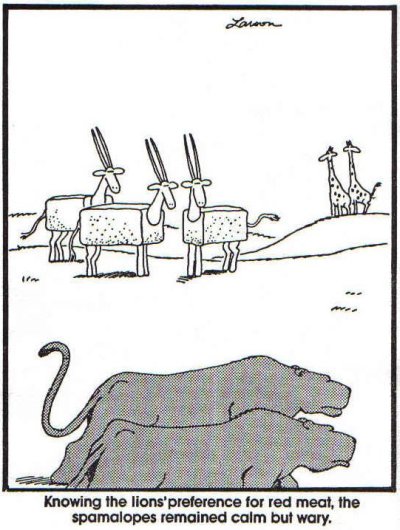
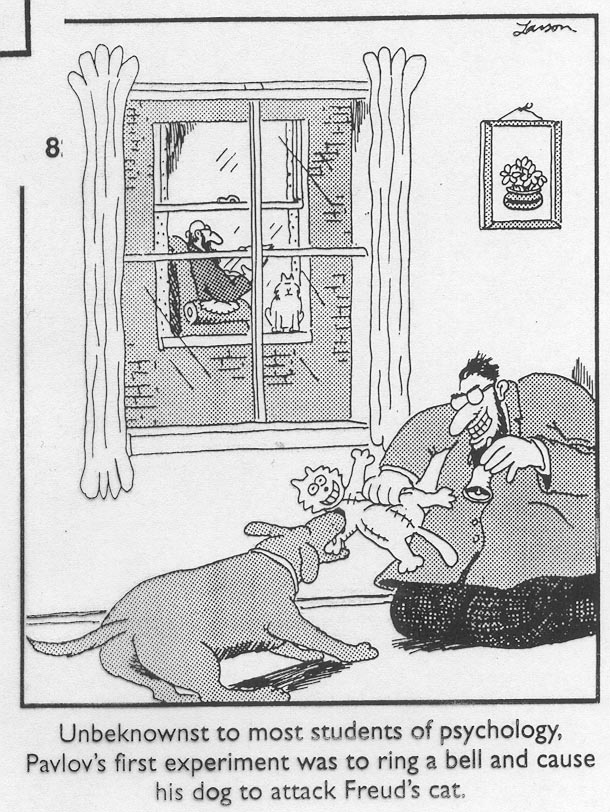 Funny quotes about cat owners
Read more: http://therealowner.com/humor/funny-quotes-about-cats-and-cat-owners/#ixzz3sSJa4CMV
ARTIST SPOTLIGHT
Master of American folk music

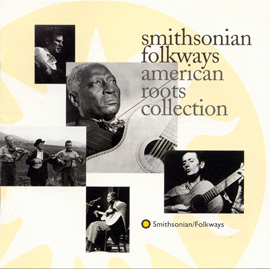
Elizabeth “Libba” Cotten (1895-1987), best known for her timeless song “Freight Train,”built her musical legacy on a firm foundation of late 19th- and early 20th-century African-American instrumental traditions. Through her songwriting, her quietly commanding personality, and her unique left-handed guitar and banjo styles, she inspired and influenced generations of younger artists. In 1984 Cotten was declared a National Heritage Fellow by the National Endowment for the Arts and was later recognized by the Smithsonian Institution as a “living treasure.” She received a Grammy Award in 1985 when she was ninety, almost eighty years after she first began composing her own works.
Born in Chapel Hill, North Carolina, Libba Cotten taught herself how to play the banjo and guitar at an early age. Although forbidden to do so, she often borrowed her brother’s instruments when he was away, reversing the banjo and guitar to make them easier to play left-handed. Eventually she saved up the $3.75 required to purchase a Stella guitar from a local dry-goods store. Cotten immediately began to develop a unique guitar style characterized by simple figures played on the bass strings in counterpoint to a melody played on the treble strings, a method that later became widely known as “Cotten style.” She fretted the strings with her right hand and picked with her left, the reverse of the usual method. Moreover, she picked the bass strings with her fingers and the treble (melody strings) with her thumb, creating an almost inimitable sound.
Libba married Frank Cotten when she was 15 (not a particularly early age in that era) and had one child, Lily. As Libba became immersed in family life, she spent more time at church, where she was counseled to give up her “worldly” guitar music. It wasn’t until many years later that Cotten, due largely to a fortunate chance encounter, was able to build her immense talent into a professional music career. While working at a department store in Washington, D.C., Libba found and returned a very young and lost Peggy Seeger to her mother, Ruth Crawford Seeger. A month later, Cotten began work in the household of the famous folk-singing Seeger family.
The Seeger home was an amazing place for Libba to have landed entirely by accident. Ruth Crawford Seeger was a noted composer and music teacher while her husband, Charles, pioneered the field of ethnomusicology. A few years passed before Peggy discovered Cotten playing the family’s gut-stringed guitar. Libba apologized for playing the instrument without asking, but Peggy was astonished by what she heard. Eventually the Seegers came to know Libba’s instrumental virtuosity and the wealth of her repertoire.
Thanks largely to Mike Seeger’s early recordings of her work, Elizabeth Cotten soon found herself giving small concerts in the homes of congressmen and senators, including that of John F. Kennedy. By 1958, at the age of sixty-two, Libba had recorded her first album, Elizabeth Cotten: Negro Folk Songs and Tunes (Folkways 1957, now reissued as Freight Train and Other North Carolina Folk Songs, Smithsonian Folkways 1989). Meticulously recorded by Mike Seeger, this was one of the few authentic folk-music albums available by the early 1960s, and certainly one of the most influential. In addition to the now well-recorded tune “Freight Train,”penned by Cotten when she was only eleven or twelve, the album provided accessible examples of some of the “open” tunings used in American folk guitar. She played two distinct styles on the banjo and four on the guitar, including her single-string melody picking “Freight Train”style, an adaptation of Southeastern country ragtime picking.
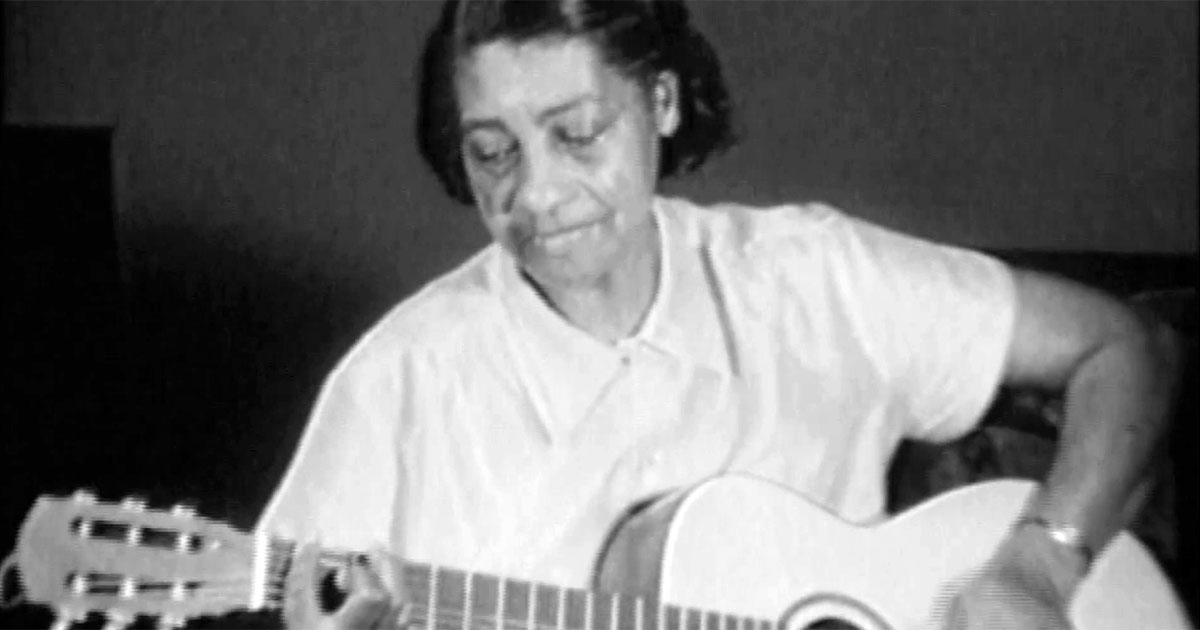
As her music became a staple of the folk revival of the 1960s, Elizabeth Cotten began to tour throughout North America. Among her performances were the Newport Folk Festival, the Philadelphia Folk Festival, the University of Chicago Folk Festival, and the Smithsonian Festival. Her career generated much media attention and many awards, including the National Folk 1972 Burl Ives Award for her contribution to American folk music. The city of Syracuse, New York, where she spent the last years of her life, honored her in 1983 by naming a small park in her honor: the Elizabeth Cotten Grove. An equally important honor was her inclusion in the book I Dream a World: Portraits of Black Women Who Changed America, by Brian Lanker, which put her in the company of Rosa Parks, Marian Anderson, and Oprah Winfrey.
Cotten’s later CDs, Shake Sugaree (Folkways, 1967), When I’m Gone (Folkways, 1979), and Elizabeth Cotten Live (Arhoolie 1089), continued to win critical acclaim. Elizabeth Cotten Live was awarded a Grammy for the Best Ethnic or Traditional Folk Recording in 1985.
Elizabeth Cotten continued to tour and perform right up to the end of her life. Her last concert was one that folk legend Odetta put together for her in New York City in the spring of 1987, shortly before her death. Cotten’s legacy lives on not only in her own recordings but also in the many artists who continue to play her work. The Grateful Dead produced several renditions of “Oh, Babe, It Ain’t No Lie,” Bob Dylan covered the ever-popular “Shake Sugaree,” and “Freight Train”continues as a well-loved and recorded tune played by Mike Seeger, Taj Mahal, and Peter, Paul, and Mary, to name a few. Libba’s recordings, concert tours, media acclaim, and major awards are a testament to her genius, but the true measure of her legacy lies with the tens of thousands of guitarists who cherish her songs as a favorite part of their repertoires, preserving and keeping alive her unique musical style.
AUDIO
Elizabeth Cotten
Audio Player
"Creative Insights for Designers & Digital Artists
Emmitt Owens
Let’s fix it
Finding Meaning in Modern Life
Real motherhood. Real fun. Real life with two wild boys.
Exploring biblical promises and their fulfillment in Israel and the Middle East.
Online hookup services
POETRY RANDOM THOUGHTS AND STUFF LIKE THAT...
Your next read is just a shelf away.
Real Life Tales
Creative alchemy for the soul
Projects, Observations, Stories and Happenings
"Consider the birds of the air...."
Exploring the writing and inspirations of Elisa Weeber
"The human race has one really effective weapon, and that is laughter." Mark Twain
Wayzom3.wordpress.com
Stories from a cemetery researcher, pipeline wife, amateur farmer & mom!
Empowering our People
"Creative Insights for Designers & Digital Artists
Emmitt Owens
Let’s fix it
Finding Meaning in Modern Life
Real motherhood. Real fun. Real life with two wild boys.
Exploring biblical promises and their fulfillment in Israel and the Middle East.
Online hookup services
POETRY RANDOM THOUGHTS AND STUFF LIKE THAT...
 Nutsrok