
I think a man thought I was trying to pick him up in the garden center yesterday…
Freakin’ FUNNY! ~ Laughter for What Ails You at Nutsrock
Thank you Ana

I think a man thought I was trying to pick him up in the garden center yesterday…
Freakin’ FUNNY! ~ Laughter for What Ails You at Nutsrock
Thank you Ana
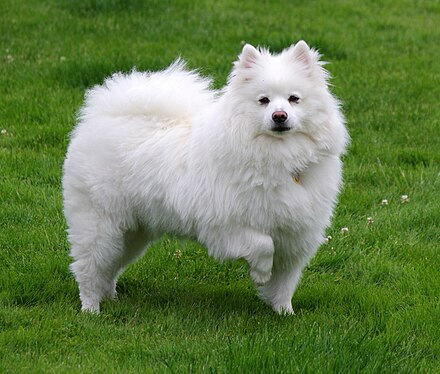
What animals make the best/worst pets?
For me, dogs make the best pets. I’ve had so many to love over the years. They fill the hole in my heart that my children left as they grew up. So many have found me when I wasn’t looking for them. One strayed up to my house and stole my heart. I picked one up on a freezing morning when I know she wouldn’t have lasted the day. We adopted one when just before he was euthanized. They are endlessly loving.

On the opposite end of the scale, I think snakes make horrible pets.

https://youtu.be/zKL2_StD6XA?si=OLvOTXeKcWnM5PTj
Click the link if you need to see snakes.
 Andrew Wharton was born to be a farm servant like his father and grandfather before him, the line extending back much further than anyone bothered to remember. His work was not a choice; he was born to work Hampton Grange and expected to die there. The only surprise was when pretty Molly Peace chose him. Ecstatic in his luck, he couldn’t believe the rollicking dairy maid favored him above all the hopeful lads pursuing her when he’d done no more than sneak shy peeks at her in Chapel. The confusion of love and glorious sensuality overwhelmed the young man who’d never contemplated the possibility that life could hold pleasure. Molly saw joy in everything, the sweet breath of the cows she milked, the warmth of the sun on her face, and the sweet sent of the hay she bundled, not seeming to notice the manure in the cow’s tail, the slogging rains, or the sneezing brought on by the hay.
Their life at Hampton Grange offered the couple little beyond a small hovel, milk and cheese from the dairy, a daily ration of bread and beer, the privilege of wood gathering, and scant wages. Once a year, they were due a measure of wool for their own use. Compared to the conditions many experienced, it was adequate under Old Squire John’s management. Left to his gambling heir, it was soon lost to bankruptcy, leaving them adrift.
Andrew and his new wife Molly found themselves standing in the freezing rain wearing all they owned before a pub in Liverpool. After three days’ starving, they were easily persuaded to join an agent for The Virginia Club for food and drink. With no prospects, they were Signed papers of indenture pledging the next four years of their lives in exchange for passage to the Jamestown colony in Virginia. For their volunteer bondage they would receive lodging, food, and clothing, the quality to be determined by their master. They were fortunate in being bound four years. Most were bound seven years. including involuntary prisoners or abductees. At the end of their service, they were entitled to tools, money, and land. Like so many other indentured servants, they could expect years of unrelenting labor and uncertain treatment. In truth, the next few years wouldn’t be greatly different to the life they were accustomed to if they were fortunate enough to be bound to a good master. At least they’d have a start at the end of their time.
This is a guest post by my friend Harvey Hughett. You can follow him on Facebook at Musing Appalachia
This story is about a man who lived in a holler close to Papaw’s place in the backwoods near Mohawk, East Tennessee. He was married to Miz Kitty. Everybody called him “Squint.” His real name was Commodore Ledbedder.
Squint was just a nickname, but he hated to be called Commodore because it was the same name as Commodore Hughett and he didn’t want to be confused with him. Commodore Hughett was known to git hog-nosed on Nathan Gulley’s moonshine ever so often and do things Squint didn’t approve of. Squint got his nickname from the funny way he held his eyes when he was about to get upset with somebody. He’d squint his eyes a certain way, and when he did that you knew you’d better get your butt out of his way. He got his left eye messed up when his first wife shot him in the face for messin’ around. She left him for another man, and Squint joined the army, went to World War II, and fought in France against the Krauts.
He was a big man, about six foot tall, and had big arms and a gruff voice from when he once drank some really bad hootch. There was a time when he served some time in prison for killing a man, but they let him loose because he got a mean lawyer, and they couldn’t make the charge stick.
However, all that was behind Squint. He quit drinkin’, quit carousing, and got religion. However, he didn’t attend my Papaw’s church very often except when there were homecomings and lots of food and activities with the boys in the parking lot. I write in detail about that in my book, Musing Appalachia (You can buy it on Amazon.com. Just search Musing Appalachia by Harvey Hughett).
For the most part, Squint was a loner and made spending money by trapping muskrats in Bent Creek, digging ginseng roots and selling ’em to the hardware store in Morristown. He wasn’t getting rich, but he and Miz Kitty made out good. And he treated her like a queen. Whatever she wanted, he tried to get it for her. Miz Kitty was French by birth. Squint brought two things back with him from the war: a 1901 Springfield rifle and a young French bride.
Squint was descended from strong Scotch and Irish people, and they say, along with his size, that made him a good soldier. His hero was another Tennessean, Sargent Alvin York. You can read about Alvin in Volume One of my book too.
Squint wasn’t without his strange habits. Other than being a loner, he didn’t like anybody coming around his place in the holler or, especially, gittin’ near his woman, Miz Kitty. She was easy on the eyes and had a quaint accent that everybody liked. Her language wasn’t like what the flatlanders talked.
Mamaw used to trade eggs to Miz Kitty and she’d send me over there to deliver them. As a young boy, I was a little afraid but I did what I was supposed to. Papaw always warned me, “Be careful and don’t you make him mad. He killed a man onest.”
The first time I saw Squint was when I was fishing on Lick Creek and ran into him. He was busy tending his trapline and I slipped away before he could see me. I went on fishing downstream.
A few days later, I was at Miz Kitty’s house delivering eggs and Squint was there. He squinted his eyes at me and said, “Boy, don’t you dare tell nobody where my traps is, you unnerstand?” I quickly replied, “Yes Sir. You bet, Sir. I ain’t gonna tell nobody.”
He squinted at me a little harder and then said, “Do you know they say that I killed a man? I answered, “Yes Sir.”
He said, “Well, that’s not all true. I wiped out a bunch in the war, and they tried to blame a killin’ on me after I got home. But the fact is, that man needed killin’. He was beatin’ his woman and kids.” Squint never admitted to killin’ his neighbor but people figured that since he was used to doing that kind of thing in the war, and suffered from shell shock in battle, he most likely did.
The facts are that he was a neighbor to the dead man and, being a loner and of a mean disposition, everybody suspected him of the murder. What got him in trouble was when they took him in for questioning and he said, “That scoundrel deserved ever thang he got!”
To clinch a solid confession out of Squint, the mountain sheriff did something that almost always got a man to fess up: he took him to the funeral home in Bulls Gap and left him alone in a room with the body for an hour. That usually unnerved superstitious mountain folk and they soon talked.
After an hour, Squint just said, “That man there is way better off dead than he was alive.”
Pretty sure that was almost a confession; the sheriff then threatened to leave him in the small room with the body all night, with the casket open and with no lights on. Squint, in his matter-of-fact way, just said, “I warn’t never skeered o that sorry bastard when he wuz alive and you can bet yore best coon dog, I shore in Hell ain’t now!” That pretty well sealed it and he was locked up until a smart lawyer got him off the hook.
I wonder if he squinted at the jury?
Please share this story with your friends if you like it. FOLLOW this Facebook site for more stories

"Creative Insights for Designers & Digital Artists
Emmitt Owens
Let’s fix it
Finding Meaning in Modern Life
Real motherhood. Real fun. Real life with two wild boys.
Exploring biblical promises and their fulfillment in Israel and the Middle East.
Online hookup services
POETRY RANDOM THOUGHTS AND STUFF LIKE THAT...
Your next read is just a shelf away.
Real Life Tales
Creative alchemy for the soul
Projects, Observations, Stories and Happenings
"Consider the birds of the air...."
Exploring the writing and inspirations of Elisa Weeber
"The human race has one really effective weapon, and that is laughter." Mark Twain
Wayzom3.wordpress.com
Stories from a cemetery researcher, pipeline wife, amateur farmer & mom!
Empowering our People
"Creative Insights for Designers & Digital Artists
Emmitt Owens
Let’s fix it
Finding Meaning in Modern Life
Real motherhood. Real fun. Real life with two wild boys.
Exploring biblical promises and their fulfillment in Israel and the Middle East.
Online hookup services
POETRY RANDOM THOUGHTS AND STUFF LIKE THAT...
 Nutsrok