How do you unwind after a demanding day?
Since I am retired and my time is my own, unwinding is not needed. I usually shut down anything I have going on by three. After that, I get dinner going and read or walk the dogs. I am grateful for my life.

How do you unwind after a demanding day?
Since I am retired and my time is my own, unwinding is not needed. I usually shut down anything I have going on by three. After that, I get dinner going and read or walk the dogs. I am grateful for my life.
Molly felt a change in the air when she went into the post with Aggie with trade goods. A pretty woman attracted a lot of attention where men vastly outnumbered women. From time to time, a ship arrived bearing women convicts involuntarily indentured. As often as not, they were offered marriage. Should they go to a house without a wife and not be offered marriage, their future was unsure. Rape was an ever present concern for a bondswoman with punishment for pregnancy out of wedlock a surety. Molly felt the men looking at her differently, now Andrew was gone. One or two who’d been eyeing her tried to buy her bond from Wharton, though thankfully, so far he’d declined. Molly knew with the spring work looming ahead, he’d have to engage help. She kept as close to home as possible, hoping not to attract attention.
In her grief, she wasn’t thriving, going about her tasks by rote. Aggie treated her much more warmly, initiating conversations and sharing tales of her girlhood, courtship and early marriage. Without her to take her mind off her troubles, Molly had little else to think of except her fear and grief.
After a few weeks, Molly’s fears eased a bit when Master Wharton made no move to change their situation. She worked hard, trying to make his home comfortable and Aggie made sure she knew just how he liked his favorite dishes and how he liked things done. When her appetite returned, she thought it was because she took pride in her cooking. When she started throwing up and her breasts got tender she feared it was something else. Molly had confided to a friend at chapel, she was sleeping in the barn again to guard against the appearance of evil. While Bartles and Aggie were glad she was protecting her reputation, they were fearful her confidence might attract unwelcome company. Master Wharton insisted she keep the door barred and Jackie at her side when she was abed. Between them, Wharton and Bartles resolved to keep her safe. Sure enough, it wasn’t long before Jackie woke her lunging at the door and barking. Master Wharton fired shots at a man fleeing in the woods.
Aggie noted Molly going about her labors with her collar button opened when she came over with some baking. “Why is your collar button undone? It’s a cool morning? When I was in the family way, the first thing I noticed was a tight collar button. How long since you had your courses?”
Molly stammered. “I’m not sure. I think it was a week or so before Andrew was lost.”
“I thought you had the look of breeding. Have you been sick in the mornings?” Aggie went on. “Do you have cravings? How long since you had your tea every day?”
Molly looked devastated. “I never thought of it since the trouble, till I got sick in the mornings and my breasts felt tender, but Aggie, I can’t give this child up, no matter what. It’s the last of Andrew. What if he comes back? I know I could punished for breeding, but there has to be a way. Anyone can count back and know when this babe was conceived. It would be too cruel to take it from me when I’ve nothing else. What am I going to do? Is there any way you and Bartles could buy my bond? I’ll work for you as long as you ask me to if you’ll just help me save my baby!”
“Oh Molly, we have just a few coins after equipping our cabin. It’s not possible for us to buy a bushel of corn, much less your contract. Of course, you and the child could stay with us, but the master has already lost two bondsman. It’s doubtful he could give you your freedom, even if you stayed with us. We’ll have to talk to Bartles about all this. It puts you in a terrible place. A woman in the family way with no man is in terrible danger in this place.”

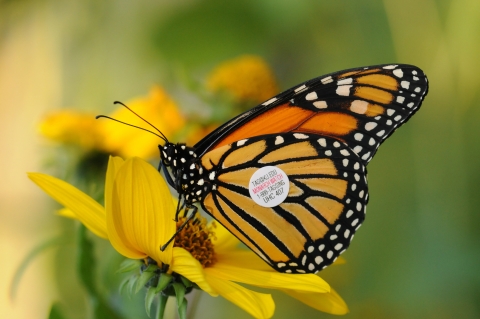
I’ve had milkweed for years but never been fortunate enough to attract a monarch butterfly. The only thing monarchs can eat is milkweed, Many times, I’ve made the rounds of garden centers hoping to find a plant laden with a caterpillar. Last week, I finally snagged two plants with the coveted caterpillars. As soon as I got them home, I tucked the plants with my little friends in the protective net enclosure I had tucked back for a lucky day.

I was so happy to have them safely home I went back a couple of times to check that they were still munching along.
Yesterday morning I found they had pupated and were attached to their little house. They should morph into butterflies in about fourteen days.
For more information check out the link and article below:
http://www.monarchs-and-milkweed.com/_themes/blue-red-purple-blank/blrule.gif

With its iconic orange and black markings, the monarch butterfly is one of the most recognizable species in North America. Monarchs are particularly remarkable because they migrate each year, flying from as far as Canada and across the United States to congregate at a few forested overwintering sites in the mountains of central Mexico and coastal California. These sites are an amazing phenomenon: thousands of monarchs cluster in the trees in California, and millions of monarchs drape large swathes of forest in Mexico.
But over the past two decades, monarch numbers in North America have declined, prompting the U.S. Fish and Wildlife Service to join Tribes, state agencies, other federal agencies and non-government groups to identify threats to the monarch and take steps to conserve monarchs throughout their range.
As the premiere conservation agency in the United States, the U.S. Fish and Wildlife Service has the responsibility to ensure that the monarch migration phenomenon continues. It’s going to take everyone – from government agencies to individuals to ensure a future filled with monarchs. You can do your part for monarchs in your backyard, in your back forty and along every back road.
We’re “all in” on monarch conservation. And we can’t do it alone. We’re focused on increasing monarch habitat on the lands we manage and engaging with all partners on monarch conservation, including Tribes, state and federal agencies and conservation groups.
Monarch butterflies are known for their impressive long-distance migration and large clusters they form while overwintering in Mexico and coastal California. Once abundant, monarch butterfly populations have been steadily declining since the mid-1990s due to several threats. Here, you can find information about how you can help monarchs, contribute to their habitat and find resources and assistance to help guide your actions.
Learn more about the monarch species.
Everyone can play a role in monarch conservation.
Learn more about ways you can get involved:
No. We have proposed to list the monarch butterfly as threatened under the Endangered Species Act. Protections would not apply until the effective date of a final rule. Learn more about the process to list a species as threatened or endangered.
We’re seeking public comment on a proposed rule to list the monarch butterfly as a threatened species (4.1MB PDF) under the Endangered Species Act. The listing proposal is accompanied by a proposed critical habitat designation for the species at its overwintering grounds in coastal California and a proposed 4(d) rule that offers species-specific protections and flexibilities to encourage conservation.
According to the most recent monarch Species Status Assessment, by 2080 the probability of extinction for eastern monarchs ranges from 56 to 74% and the probability of extinction for western monarchs is greater than 95%. Threats to the species include the loss and degradation of breeding, migratory and overwintering habitat, exposure to insecticides and the effects of climate change .
Press release: Monarch butterfly warrants Endangered Species Act protections
"Creative Insights for Designers & Digital Artists
Emmitt Owens
Let’s fix it
Finding Meaning in Modern Life
Real motherhood. Real fun. Real life with two wild boys.
Exploring biblical promises and their fulfillment in Israel and the Middle East.
Online hookup services
POETRY RANDOM THOUGHTS AND STUFF LIKE THAT...
Your next read is just a shelf away.
Real Life Tales
Creative alchemy for the soul
Projects, Observations, Stories and Happenings
"Consider the birds of the air...."
Exploring the writing and inspirations of Elisa Weeber
"The human race has one really effective weapon, and that is laughter." Mark Twain
Wayzom3.wordpress.com
Stories from a cemetery researcher, pipeline wife, amateur farmer & mom!
Empowering our People
"Creative Insights for Designers & Digital Artists
Emmitt Owens
Let’s fix it
Finding Meaning in Modern Life
Real motherhood. Real fun. Real life with two wild boys.
Exploring biblical promises and their fulfillment in Israel and the Middle East.
Online hookup services
POETRY RANDOM THOUGHTS AND STUFF LIKE THAT...
 Nutsrok
