I Couldn’t Hear if it went in Park.

A few days ago, a lady who shall remain forever nameless, came to call and pulled her little old lady white car where she could take out Bud’s Jeep and the camping trailer, if she couldn’t make up her mind which was best. I suspect she got a phone call as she pulled up to park, since she dawdled in her car for a a while before getting out. Buzzy went wild, desperate to get out and welcome her, but finally forgot as she took her time. I went back to what I was doing, knowing she’d eventually be at one of the doors. Since Bud was in the shop, I thought she might go out to speak to him first.

After about ten minutes, I heard an impact and a scrunch. “Oh no!” Running out, I saw she’d rolled into the camper, but by now had backed up.

“Oh my gosh, when I pulled in, I thought I’d put the car is n park, but I guess I hadn’t. I know it’s because I am having trouble with my ears and couldn’t hear if it clicked in park!”

As we looked for damage, I didn’t mention I never listened to see if my car went into park.
The only obvious damage, was a tiny dent she didn’t mention.

“If they’re’ any damage, I’ll pay for it. She repeated this twice, just st because she was rattled.”

“I don’t see a thing,” I assured her.

Bud came sprinting up just then. “What happened? Did somebody run into my camper?”

Before Mother (uh oh, I wasn’t going to tell) could launch the into her long explanation and excuses, I jumped in, praying Bud would just look and hush. Mother’s obsessive-compulsive explanation followed by endless apologies and self-recriminations are hard to bear. We seriously downplay problems to save ourselves.

He has suffered through this before. He’s a smart guy. “I don’t see a thing.” He declined coffee and went back to his shop.

While I fixed coffee, Mother cranked up, “Bhah,blah,blah, sure thought it was in park. Blah, blah, blah, now if anything’ wrong, I insist on paying. Blah, blah, blah, natter, natter, natter.” More reassurance given, but not nearly enough to satisfy her.

Finally, I had to redirect her. “Mother, there is no damage and nobody’s mad. Now, we have to change the subject.”

She finally let me off the hook. When Mother messes something up, she is not satisfied till the injured party convinces her the accident was the best thing that ever happened to them.

After she left, Bud and I went out to inspect. The damage was minor. I thanked him for keeping his cool.

“Yeah, well. I was about to get me a piece of cardboard and make a sign so I could wave it at cars going down the street. “Come bust my camper in the ass!”

What a guy!

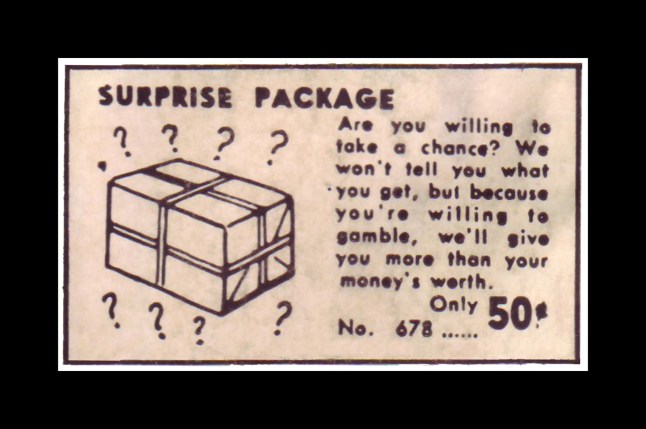
surprise

I might be wacko follow up

image.

Initial post:
Just got a text from my daughter.

Her: Just got another box of stuff from you. Can the kids open them now?

(I had ordered them some things the week before and asked her to not to open it till this box got there. Stuff for Isaac was in first box and didn’t want to cause upset.)

Me: sure. Let me know what they got n how it wkd out.. I forgot what I sent.

Her: Oh lord.

Me: well, did I send good stuff?

She never got back to me. Now, I am dying to know what I sent. I wish she wouldn’t complain about my texts.

Follow up:

For my grandson, I had sent oil crayons and sketch pad, swim trunks and shirt,self-inflating Whoopee cushion which made me grandma of the year. I also sent underwear which my daughter insists marked him for life. I should think you’d be marked for life if you never had underwear.

The baby got a swimsuit, a toy phone, a Hello Kitty fork and spoon, and a great big box to play in. She loved the box and went after her brother’s Whoopee Cushion.

Hard Times and Tough People

Cousin Kathleen had a hard time coming up. She was the oldest of seven children ranging from three to fourteen when her father died in 1934. He farmed a few acres he’d gotten from his father in the Virginia hills. Aunt Winnie had no idea how they’d manage. She and the kids struggled to get the crops in that year with the help of the neighbors, knowing that was the last help she could count on in the hard times of The Great Depression. The thought of the work facing her was overwhelming. A friend gifted her with the crop from one of his bean patches, other neighbors contributed a ham, a few hens, some produce, and what little bit they could spare. Others offered to hire the kids when they needed help from time to time.
After the crops were in, the beans picked and canned, Aunt Winnie made inventory. She owned the farm with its tiny three-room house with beds in every room, including a couple in the attic. She had a good well, a tight barn, a smokehouse, a toilet and a chicken house. Her livestock included a sow and a few fattening shoats, a few chickens, a mule, a cow, a few goats, a dog and a couple of barn cats. Her farm equipment included a wagon, a plow, hand-tools, harness, and the various other things Ed had managed to acquire. She sold the mule to a neighbor with the promise that he’d loan it back to her to plow garden every spring, giving her a bit of cash. Darryl, the oldest boy was twelve and big as a man. Between the kids, and herself, they’d have to get the work done. Aunt Winnie took a days’ work when she was lucky enough to get it, though it was sporadic since there were no real jobs. The neighbors called her to help harvest, can, or help with the sick, but she had to be home at night to care for her own young children.
Cousins Kat and Darryl never lived at home or went to school after that, taking whatever work they could, their board part of their pay. Darryl was home only for heavy work plowing, planting, and getting crops in, though Kat only got to come home on weekends. He did farm work, cleared land, cut wood, helped butcher or did whatever he could get, moving from farm to farm as the job was finished, though he had to be home long enough to plow, plant, and get in the crops on his mother’s place.
Cousin Kat took whatever jobs helping out mothers with new babies, staying with the sick or elderly, helping with farm, housework, or sewing, anything she could get. The word got around the kids were hard-working and reliable, and cheap. Kat said she never got more than two dollars a week, when she was lucky. Sometimes she worked for produce and old clothes for herself and the family. Darryl often had to take his pay in produce to take home. There were many mouths to feed back at Mama’s place.
In this way, the family scraped by. Ed’s parents had moved to Texas where they moved in on Lizzie and Roscoe, my grandparents, in the meantime. Roscoe split his farm equipment, and gave them a wagon and mule to help them get started. Upon learning of her brother, Ed’s death, my grandmother, Lizzie, wrote her sister-in-law Winnie, to sell the farm and come to Texas, where they could be of some help to them. Nobody had much, but they could all manage together. Lizzie and Winnie had been life-long friends, even before Winnie married Ed. They had stayed in touch by letter at least weekly ever since Lizzie left Virginia. She looked forward to being with her again.
Winnie, who had no other family, was looking for a buyer for the farm and planning to move her family to Texas, when she got a nasty letter from her mother-in-law telling her she had no business moving to Texas, burdening herself and her husband with that “bunch of kids.” These were her own grandkids, by the way. Winnie had “made her bed and now she had to sleep in it.” This was really cold, considering this same woman had moved her own family in on her daughter and son-in-law. Maybe she was afraid more family would put an end to their generosity. My grandmother, Lizzie, never found out the reason till she and Winnie reunited on Lizzie’s first visit to Virginia fifty years later.
Insulted, Winnie and her family stayed in Virginia where they struggled by. Things got better when Darryl was able to join the Civilian Conversation Corp and send money home. The third daughter went out to work, bringing in a little money. When World War II started, Darryl enlisted, then the other boys in turn. They lived through some hard times. The younger children got to go to school.
Cousin Kat said it was a great sorrow that she never got to live at home after her father died, missing her family’s’ twilight suppers, never getting to finish school, and getting to sleep with her sisters under her mama’s quilts in the attic. The rest of her life, she never spent a penny she could save, fearing she’d need it soon.
Darryl made the Navy his career and was very proud to have served as boson the Hornet in World War II. All Aunt Winnie’s children did well, contributing till their mother got her “old age pension.” As her health failed, the children cared for her, hiring help to get them through times they couldn’t be there, quite an expense. Despite this, when she died, she left ten-thousand dollars to be divided among her children. She must have been so frugal!
cabin

Five tips for helping out an author . . . or any artist really

Try this.

Monday Funnies…

Reblogged from Christhestoryreadingape! Ah ha ha ha!

Meet Guest Pre-Published Author Alma White…

Check out this author.

Chris The Story Reading Ape's avatarChris The Story Reading Ape's Blog

Unholy PursuitMy name is Alma White and I live in upstate New York, in the Adirondack Mountain range. It’s beautiful here, my neighborhood is bountifully populated by white-tailed deer. They are out early in the morning and late in the afternoon. I love watching a family of them move silently but clandestinely through the woods connected to my back yard.

Occasionally I go into New York City and take in an opera or go watch the Christmas tree lighting at the Rockefeller Center and have visited all the major landmarks such as Lady Liberty, the NY Metropolitan Museum.

When I’m not doing those things I’m at home reading, or writing.

I started writing these stories because it was becoming more and more difficult to find novels I wanted to read. I’m not very choosy but I didn’t like the idea of nearly every novel in the stores being a cookie cutter…

View original post 1,180 more words

Guest Post by Andrew Joyce

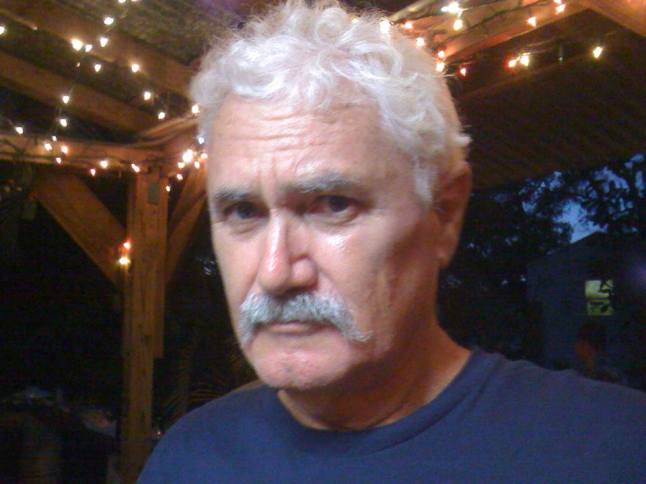
I recently got acquainted with Andrew Joyce when he helped me on a project. He is an accomplished writer and fascinating personality. If this weren’t enough, he is incredibly knowledgeable about the writing and publishing field. His generosity in helping a novice was impressive. I am so grateful I got to know Andrew. If you haven’t been introduced to his work, this is your chance. I just finished Resolution, a novel about the adventures of the mature Huckleberry Finn. I enjoyed every word. It is fast-paced, well-developed, and true to the character of Mark Twain’s Huck Finn. Though this is the third of a series, the story stood on its own. I will be getting the first two.
image

The Best Writing Advice You’ll Ever Get

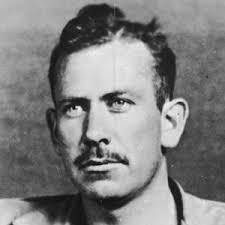
There is one bit of advice that I have for aspiring authors. And that is, if you want to write well, you must read. Reading to a writer is as medical school is to a doctor, as physical training is to an athlete, as breathing is to life. Think of reading books as taking a writing course. I would suggest reading the classics: Hemingway, Fitzgerald, and, of course, Steinbeck, to name but a few. These three authors made up their own rules. Hemingway couldn’t get published at first because his writing was so different from the writing that preceded him.
Below are three examples of Steinbeck’s writing. If you read stuff like this, you can’t help but become a better writer. Please note that the first example is one long sentence that makes up an entire paragraph. That, of course, is a big no-no . . . or so “they” say.
• • • • •
“The concrete highway was edged with a mat of tangled, broken, dry grass, and the grass heads were heavy with oat beards to catch on a dog’s coat, and foxtails to tangle in a horse’s fetlocks, and clover burrs to fasten in sheep’s wool; sleeping life waiting to be spread and dispersed, every seed armed with an appliance of dispersal, twisting darts and parachutes for the wind, little spears and balls of tiny thorns, and all waiting for animals and the wind, for a man’s trouser cuff or the hem of a woman’s skirt, all passive but armed with appliances of activity, still, but each possessed the anlage of movement.”—The Grapes of Wrath
• • • • •
“The afternoon came down as imperceptibly as age comes to a happy man. A little gold entered into the sunlight. The bay became bluer and dimpled with shore-wind ripples. Those lonely fishermen who believe that the fish bite at high tide left their rocks and their places were taken by others, who were convinced that the fish bite at low tide.”—Tortilla Flat
• • • • •
“June is gay—cool and warm, wet and shouting with growth and reproduction of the sweet and the noxious, the builder and the spoiler. The girls in the body-form slacks wander High Street with locked hands while small transistor radios sit on their shoulders and whine love songs in their ears. The young boys, bleeding with sap, sit on the stools of Tanger’s Drugstore ingesting future pimples through straws. They watch the girls with level goat-eyes and make disparaging remarks to one another while their insides whimper with longing.”—The Winter of our Discontent
My first bit of advice is to read. My second: don’t pay too much attention to the “rules” of writing. And my third is, never, ever, ever respond to a bad review.
Thank you for listening to my morning rant,
Andrew Joyce
image

image

It is 1896 in the Yukon Territory, Canada. The largest gold strike in the annals of human history has just been made; however, word of the discovery will not reach the outside world for another year.
By happenstance, a fifty-nine-year-old Huck Finn and his lady friend, Molly Lee, are on hand, but they are not interested in gold. They have come to that neck of the woods seeking adventure.
Someone should have warned them, “Be careful what you wish for.”
When disaster strikes, they volunteer to save the day by making an arduous six hundred mile journey by dog sled in the depths of a Yukon winter. They race against time, nature, and man. With the temperature hovering around seventy degrees below zero, they must fight every day if they are to live to see the next.
On the frozen trail, they are put upon by murderers, hungry wolves, and hostile Indians, but those adversaries have nothing over the weather. At seventy below, your spit freezes a foot from your face. Your cheeks burn—your skin turns purple and black as it dies from the cold. You are in constant danger of losing fingers and toes to frostbite.
It is into this world that Huck and Molly race.
They cannot stop. They cannot turn back. They can only go on. Lives hang in the balance—including theirs.

Andrew Joyce left high school at seventeen to hitchhike throughout the US, Canada, and Mexico. He wouldn’t return from his journey until decades later when he decided to become a writer. Joyce has written four books, including a two-volume collection of one hundred and forty short stories comprised of his hitching adventures called BEDTIME STORIES FOR GROWN-UPS (as yet unpublished), and his latest novel, RESOLUTION. He now lives aboard a boat in Fort Lauderdale, Florida, with his dog, Danny, where he is busy working on his next book, YELLOW HAIR.

Amazon
Smashwords
Barnes & Noble
iTunes
Kobo

Andrew Joyce Author


Goodreads

I might be wacko

image

Just got a text from my daughter.

Her: Just got another box of stuff from you. Can the kids open them now?

(I had ordered them some things the week before and asked her to not to open it till this box got there. Stuff for Isaac was in first box and didn’t want to cause upset.)

Me: sure. Let me know what they got n how it wkd out.. I forgot what I sent.

Her: Oh lord.

Me: well, did I send good stuff?

She never got back to me. Now, I am dying to know what I sent. I wish she wouldn’t complain about my texts.

New Series – Dog of the week (or cat, parrot or spouse) By Special Request!

Reblogging gged Danny the dog via Sally.