
I grew up in the fifties and didn’t expect much. I didn’t feel deprived, just understood the situation. All the family toys fit in a medium-sized box and were shared. We had mean cousins who regularly tore them up, so storage wasn’t a problem. If we realized they were coming and had time, we locked them in my parent’s bedroom, but nothing was foolproof. Those hellions could ferret out a steel marble locked in a safe and tear it up. No kid I knew laid no claim to a television, radio, or record player. We were free to watch or listen along with our parents and act as the remote control as a bonus.
Most of mine and my brother’s time was spent outdoors. We had the run of our property, including a large two-story barn, so we never had to stay indoors, even in rain or rare icy weather. “Get your jacket and shoes and socks on before you go to the barn.” I was more concerned about getting out than I was about bad weather, so I’d gladly have gone barefoot and jacketless, given the chance.
Mother, a pessimist, foolishly believed in hookworms, stray nails, and broken glass. I knew better, but she stayed on me. It was a real downer. If I got wet, I certainly didn’t come in to dry off. Most likely, I was wearing my only shoes.
Should Mother notice wet feet or muddy clothes, we’d be stuck indoors for the day or till our jackets and shoes dried I learned early that if you stay out in your wet things, pretty soon they lose that discolored, wet look. Besides if you play hard enough, you generate some heat.
Our barn was two stories with a gigantic open door centering the second where Daddy backed up his truck up to load or unload hay. It was a thrill to get a running start and fly to the ground eight or ten feet below. Dry weather provided the softest landings since thick, shredded hay and powdery manure make a decent cushion. Even the most determined jumper soon learned the folly of jumping on a rainy day. It was too easy to slide into something horrible.
Regular wet clothes aren’t too bad, but malodorous puddles and cow pies should be avoided at all costs. No one ever broke an arm or neck.
Playing on the square hay bales without damaging them is an art worth learning. Tearing up baled hay quickly got us expelled from the barn as well as plenty of trouble. It didn’t take long to discover which friend could be trusted to do right. Billy and I policed them and put a stop to tearing up bales. Daddy had a stacking method we knew not to mess up.
The cats loved the barn, busying themselves with the rats who also made themselves at home. I’ll never forget the horrible feeling of a rat running up my leg.
Knowing rats hid in our playhouse made them no less scream-worthy, though we weren’t afraid of them, often hurling corncobs at them. I don’t think I was ever fast enough to do any damage. Sometimes we were a little more effective with slingshots or a BB gun.
A covered area below the loft was intended for equipment storage. Interestingly, only the broken equipment was under the shed. Presumably, repairs were started and abandoned there. The good stuff sat out in the open. Very little space was taken up for feed. Mostly, it served as a repository for junk items.
One of the most interesting was a rough wooden box with filled with letters and personal items both parents brought to the marriage. We were forbidden to open that box on pain of death, so were sneaky as we prowled through it, enjoying the pictures and letters from old sweethearts, navy memorabilia including a gigantic pin used to close Daddy’s navy gear bag, six two-inch chalkware dolls in their original box, and two enormous carved ebony spoons featuring a naked man and a woman with pendulous bosoms.
I can only assume Mother was too much of a coward to hang those shocking spoons on her kitchen wall. Her sister, Anne, in the WACS had brought them home as a gift to Mother, a woman who wouldn’t say butt or titty, euphemizing with “your sitting down place “or “chest” if absolutely necessary. What a waste. If fondling ebony wood breasts makes a pervert, I signed on early. The man was not anatomically correct or the guilt would have undone me. The pity of it was, I couldn’t ask questions about any of those treasures since the boxes were strictly off limits.
Sadly, the rats devoured the letters long before I learned to really read cursive, though Phyllis bragged she got to read some. I prefer to think she was lying.
Lean-to sheds with stalls flanked the left side and back of the barn. We frequently snitched oats and lured the horse near the rail partitions dividing the stalls while the other slid on for a brief ride, then switch around for the other to ride. We badgered Daddy Incessantly to saddle the horse for us, until one fine day when I was about ten, he told us we could ride any time we wanted if we could saddle the horse ourselves.
We never expected that. Billy and I did the old oat trick and had the horse saddled in minutes. We rode any time we wanted after that. I know the horse hated what was coming, but could never resist the oats. When he’d had enough, he’d scrape us off by walking under the low roofed stall.
That barn was the most glorious play area any kid ever knew. We were the luckiest kids around.
 By the time Joe pulled his mules to the door to unload his wagon, it was sleeting. His life had never looked more hopeless as he brushed the icy hay from the tattered quilt covering the children’s burning faces. Though it was unchristian, he’d half-hoped to find them already dead from the fever, solving the problem of their care.
 My great-Uncle Albert’s barn raised the bar for what a barn should be. A rambling, splotched caterpillar, it sprawled behind his rustic house. It was an amalgamation of scavenged lumber of various vintages. Over many years, he’d added on as the need arose and opportunity allowed Of an age to have experienced The Great Depression in its entirety, he understood waste not, want not. His house and outbuildings were built largely of reclaimed lumber. One stall of his barn was lied high with neatly stacked reclaimed lumber stored in readiness for his next project. He had recently been hired to tear down and haul off an old house, the very lumber now resting in his barn. Coffee cans of used nails sat on a shelf. As tempting as it looked, one hard look from Uncle Albert made it clear his lumber was off limits for climbing.
 As wide as she was tall, the little old lady looked amusingly like a cartoon turtle in a floral dress slipping slowly out the back door before full daylight. The last I remembered, I’d been asleep on the train. Not wanting to be left alone, I rolled to my belly and hung off the edge of an unfamiliar bed, my pudgy feet peddling till I thudded solidly to the unfinished wood floor. Following her out into the dewy grass of the early daylight, I saw her lurching one-sidedly under the burden of a heavy bucket of corn in one hand and a shovel in the other, totally unaware of my silent pursuit. As I padded silently behind, sandburs pierced my baby feet. Dropping to my round bottom, I shrieked at the insult. The grass at home was soft and welcoming. Startled by my banshee cries, she turned. “Oh my Lord! I thought I shut the door behind me. You could have gotten in the road!”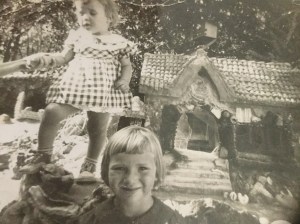
 I grew up in the fifties and didn’t expect much. I didn’t feel deprived, just understood the situation. All the family toys fit in a medium-sized box and were shared. We had mean cousins who regularly tore them up, so storage wasn’t a problem. If we realized they were coming and had time, we locked them in my parent’s bedroom, but nothing was foolproof. Those hellions could ferret out a steel marble locked in a safe and tear it up. No kid I knew laid no claim to a television, radio, or record player. We were free to watch or listen along with our parents.
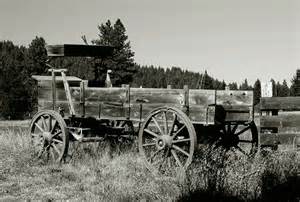 By the time Joe pulled his mules to the door to unload his wagon, it was sleeting. His life had never looked more hopeless as he brushed the icy hay from the tattered quilt covering the children’s burning faces. Though it was unchristian, he’d half-hoped to find them already dead from the fever, solving the problem of their care.
 Nutsrok