
https://atomic-temporary-73629786.wpcomstaging.com/2015/10/08/laundry-in-the-1950s-part-1/
 Once all that mountain of wash was done, the heavy, wet wash had to be lugged out to the clothes line, no small feat. Mother had three lines stretched between T-shaped supports. Shaking each piece to get in basic in shape after its trip through the wringer, the towels and diapers gave a nice, sharp pop! She propped the heavy lines up with clothes line poles so the wash could dance in the breeze. Woe be it to the foolish kid who’d run off with her clothes lines poles. I’ve been known to do it!
She usually sent us out several times to check to see if the laundry was dry. There is no smell fresher than line-dried laundry. I just loved sliding into bed between sheets fresh off the line. The mountain of laundry was likely to be piled on a bed till it could be folded.
Starched clothes came off the line still slightly damp, if she caught them at just the right time. Rolled into tight balls and stuffed into a pillow case, they’d be stuffed into the freezer till ironed. If they got completely dry, she’d have to sprinkle them before stuffing them in the pillowcase, by dipping her hand in water and flipping droplets on the clothes. One Christmas, I gave her a sprinkler cap that fit in a coke bottle. She said it was the most useful gift she ever got, making her sprinkling so much easier.
When Mother had to wash in rainy or wet weather, laundry was hung lines on the back porch, and on chair backs. Once in a while, after a string of rainy day, she’d get desperate and have to take laundry to the Washateria to dry, but that was a huge hassle and unnecessary expense, not to mention, we only had one car. That meant she had to take Daddy to work and pick him up, not a small undertaking with small children in tow.
As soon as we were old enough, we were pressed into service on clothes line duty and folding and putting away the laundry that didn’t have to be ironed. Naturally, I thought that was awful, having to do “Mother’s work.” I did have enough sense to keep my opinions to myself after a couple of complaints, though.
Mother kept an eye out for sudden rain, flying to the line to get her laundry. If it wasn’t quite dry, it went on the back porch to finish. Laundry had to be in as early as possible, for fear of sudden showers. God forbid, from time to time, birds left a surprise on the drying clothes.
At the end of this relaxing day, Mother usually set us down to a slow-simmered supper(not dinner) of beans or soup and cornbread since she’d been working on laundry all day.
It was the life!

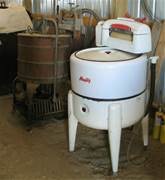 She manually filled the machine with hot water from a connection on the back porch as well as several pans of water boiled on the stove for her whites. Adding plenty of Clorox and laundry soap, she turned on the agitator and loaded her whites. The machine agitated the wash vigorously till she turned it off. When she was satisfied the whites were clean, the water was was usually still steaming hot. She’d turn the agitator off. While the clothes were washing, she’d fill two big galvanized tubs with rinse water, using the hose.
 Nutsrok