I Loved Lucyop

1251973651_frog-scratching

When I met Lucy, it was love at first site.  Not romantic love, but the best kind, true friend love.  A freckled, barefoot girl, Lucy’s hands were covered in warts.  Everybody knew you got warts from playing with frogs.  I played with frogs every chance I got, but so far had not been able to acquire the warts I coveted.

Naturally, I had to ask, “How’d you git them warts?”  I always took the subtle approach.

“How do you think?  From playin’ with frogs, Dummy.  Frogs’ backs is covered with warts.”  My admiration grew exponentially, a girl who liked frogs and wasn’t afraid to say “pee” without looking around to make sure her mama couldn’t hear.  I had a hard life.  My own mother made us say “wee wee” and swore she’d know if we EVER said “pee.”  “Pee” was vulgar.  I’d had my behind paddled more than once for getting caught.

“You got any frogs now?  I want to see them warts.” I had to know. 

“Sure.  There’s always some at the creek.”  She took off with me following.  Wading in, we were soon rich in frogs. Catching a couple, we examined them, finding their backs splendidly populated with warts.

We passed an idyllic afternoon with those frogs in the cool creek.I still remember the feel of those scratchy warts on my fingers. Tadpoles frolicked joyously in shady pools, just out of our reach. Wet and muddy to the waist, I that day I knew perfect joy. Time stood still. Long before I’d had my fill of warty frog fun, Mother called out saying it was time to go, but not before I slipped a couple of frogs in my pocket.

“Oh no!  I gotta go, already.” I whined.

“That’s okay.  Next time you come back, we’ll git you a snake.” She promised.

I got the snake, but never did get my warts.

Battered, Beloved, Old Toys

img_1701My mother has a collection of toys some of which are more than fifty years old, not collector edition type toys, just old junky stuff like cheap plastic fire trucks, broken race cars, a metal tractor, a few green plastic army men, and a few leftover circus animals from a forty-year-old Fisher-Price Circus. The prize item is an articulated Tonto who is missing his right hand. He is forty-two-years old, and thankfully not anatomically correct since his pants are long-gone. Eight of the ordinal dozen ever-popular monkeys from a Barrel of Monkeys still survive along with partial can of battered pick up sticks. Except for the Barrel of Monkeys that belonged to my younger sisters, most were scavenged from my kid’s toys that were being tossed. Every grandchild and great-grandchild who has visited in the last forty-four years goes straight for this rag-tag collection and scatters them over Mother’s living room floor, no matter that most are in some stage of dilapidation. My nephew, age eleven, is pictured here playing earlier this week. Clearly, neither Mother, nor any of her descendants suffers from the sin of false pride.

Video

Sauce for the Goose

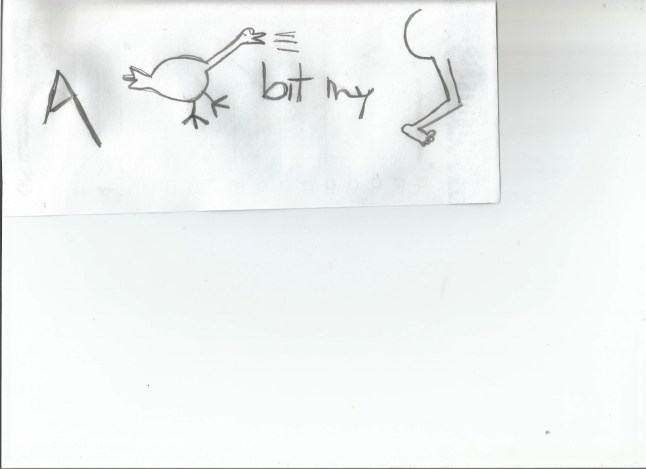
noteIt’s been more than fifty years and my brother Bill still has nose out of joint over a little goose bite that he suffered way back in first grade.  Hard to imagine holding a grudge against poultry that long.  Billy was Daddy’s shadow, making every step he made.  Though I was normally with them, somehow I missed this day.  Had I not discovered a note  very much like this he wrote to his friend, Donnie, I’d never have learned of his misfortune.

On this particular day, Daddy and Uncle Dunc swapped lies over coffee on the high front porch of Uncle Dunc’s place while Billy played with the twins, Fats and Little Boy on the hard-packed clay underneath. Despite the descriptive names, I couldn’t tell the boys apart.  The decrepit, unpainted house might have been sound at some point in the distant past, but it wouldn’t have withstood much of a windstorm now.  The corners perched crazily on stacked piles of iron-ore rocks, oxidizing to dust in the weather.  Chickens, ducks, and geese roamed freely over the yard and under the porch.  We were warned to watch for snakes in the shadows under the porch, but a far greater danger was the ever-present foulness left behind by the numerous fowl pursuing insects into the shade.

Daddy called out to Billy, “Son, go get me a pack of Camels off the dash of my truck.”

Unhappily for Billy, as he trotted toward the truck on his mission, he made an attractive target for an aggressive gander patrolling the yard.  Honking, the monster pursued Billy, chomping down on the backside of his jeans.  As poor Billy fled, the goose hung on tightly and flogged him roundly.  Of course, Daddy rescued him, but it must have seemed like it took forever, as the kids and adults all around him laughed at his misery.   He came home sporting a big bruise and a lifelong dislike of geese.

Scary Words

Scary things I’ve heard coming out of my kids’ mouths:

To a messy neighbor:  “My daddy said you need to clean that mess up!”

To my dad: “Climb a weed, Papa!”

Comment as portly lady turns to leave checkout line:  “I was good not to call her a great big old fat lady, wasn’t I Mommy?”

To the dentist who encouraged her to floss:  My mommy won’t buy me any floss.”

Loud protest when I tried to shush my daughter in a restaurant: “He is so a fat man!”

In a grocery store:  “My mommy took my money to buy groceries.”

To the neighbor man:  “My mama’s ta tas are bigger than yours.”  Go figure.

To a kid who had been hitting him:  “My mama said I have to hit you.”  Whack!   There was a little story behind this.

To a visiting relative:  “My mama is tired of you sleeping here.”

To an elderly relative: “You smell like pee.”

To a relative:  “My mama hates your mean little dog.”

My young son to his grandma:  “Not by the hair on YOUR chinny-chin-chin!”

Worst of all:  “My mama said…….”

Sunday Meditations

imageThe Swains lined the third pew from the front on the right side of the church.  Daddy insisted on it.  I might be a better person today if I’d gotten to sit on the back pew and write notes and giggle with my friends.  I had a lot of time over the years to study those in front of me, the only thing that kept me from going bonkers during the long service.

Brother Deck, an ancient deacon sat in the middle of the front pew, wearing ancient suits, heavy black, wool in winter and gray gabardine in summer.  The gabardine had been pressed so much it was thin and shiny.  Should it be hot enough for him to remove his jacket, we were treated to a view of a gray, gabardine wedgie, which somehow, he never seemed to notice, though I was always puzzled at how he could tolerate it.  Though the poor old man was stone-deaf, he never missed a service.  He nodded off to sleep as soon as the sermon started.  His anal sphincter must have relaxed as well since he punctuated the sermon with occasional farts instead of “Amen!”  It was nice comic relief to sermons.  I was fascinated with Brother Deck, anyhow, since he left the bed in a spooky old farmhouse with his two reclusive old sisters.  The kids told tales that they were crazy, but that didn’t discourage any of us from accepting the wonderful newspaper wrapped pears they passed out every Halloween.  They couldn’t have been nicer the few times I saw them.

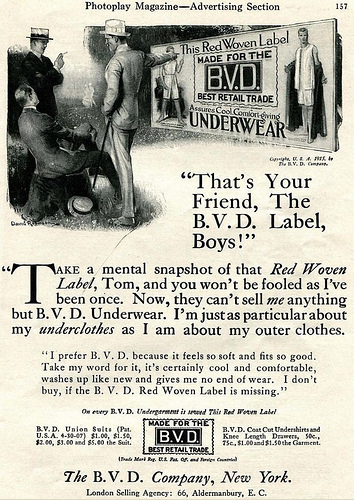
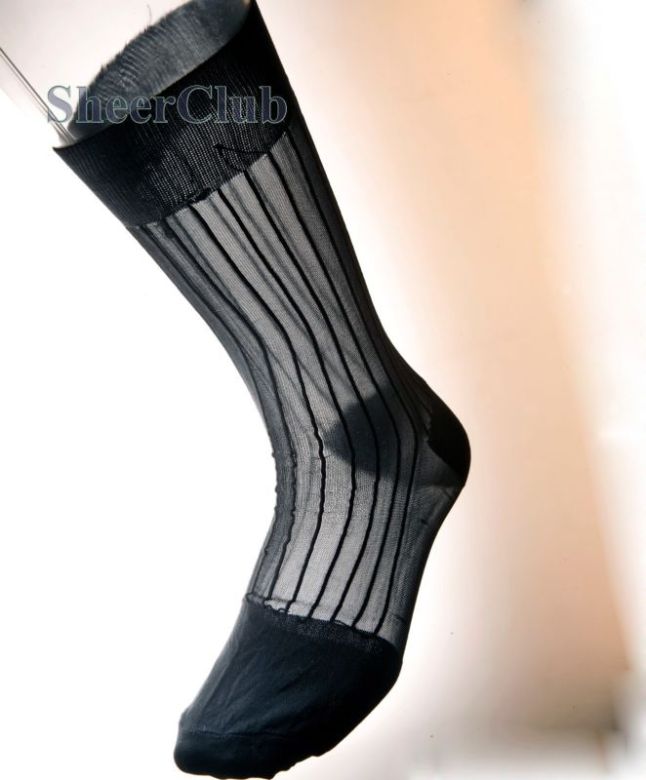
Mr. and Mrs. Bob Lincoln sat at the opposite end of the pew in front of us.  Mr. Bo was on the school board and Miss Mary Lincoln a retired teacher.  They appeared quite prosperous and were much admired in the community.  I had plenty of time to observe Mr. Bob, and one day noted he was wearing BVDs. I had no idea what BVDs were at the time, but could clearly see a cross-cross strap pattern through the back of his his thin dress shirt.  Not only that, he wore fancy silky black socks, with alternating sheer and slightly heavier woven stripes.  I always felt a bit like a voyeur sneaking  peeks at the sight of his nearly naked ankles through those dashing socks.

image

image

Miss Bonnie sat in the middle of the front row of the choir, next to her sister Miss  Ozell, whispering and giggling silently, her shoulders heaving with poorly concealed mirth. A mountain of a woman, that pew must have suffered under her amusement.  I always anticipated the collapse of the pew, but my evil thoughts were never rewarded.  One memorable Sunday, the minister preached with an unzipped fly, holding everyone’s attention.  It’s really hard to keep your eyes on someone’s face while they’re tromping around with an open fly.

One fine Sunday when Daddy worked, my brother Billy took convinced Mother to let him sit with his buddies.  They slipped into a back pew at the last minute.  When the sermon started, Bill pulled a super ball from his pocket to amuse himself and his friends.  Clearly, nothing good would come of that.  Predictably, it wasn’t long before It bounced to the sloping hardwood floor.  It was amazing how beautifully it entertained as bounced joyously to the front, not even waiting for the altar call.  As it neared the altar, the minister stepped from behind the pulpit and deftly scooped it up and put it in his pocket without a pause in his sermon.  Bill vainly hoped his ownership would remain secret till the minister returned it as he exited the church.

The next Sunday we all lined the pew.

Cool Water

Half empty

Since I frequently mention Mother in humorous stories, I thought perhaps I should tell you more of her true nature. She lives in a quiet neighborhood on a corner lot, always busy working in her yard, which over the past thirty years, she has landscaped lovingly. For more years than I can remember, she has kept a cooler of ice water on her back porch, with cups, for any passerby, who needs a drink. She washes and reuses the cups, discouraging waste. Most days, she is on hand to greet the kids when they are getting in from school to ask about their day, encourage them, or just talk. Should she hear unkindness, she reminds them, “You can’t talk like that. How would you feel if someone called you that?” If a child tells her of being bullied, she says, “Tell your parents or teacher. If they don’t help, come back and let me know. We’ll figure something out.” She has become so well-known, that walkers of all ages in her neighborhood stop for a drink, carefully returning their used cups to the bin for rewashing. Many times I’ve seen kids tap on the back door or hunt her up in the yard to let her know she has fallen down on the job by letting the water cooler run dry. So many stop by that she can’t possibly know them all by name, although they certainly know hers.

Mother loves light, so when she isn’t working outdoors, she usually keeps her backdoor open, often privy to interesting exchanges between the kids.  They feel perfectly free to talk in front of her, like she is part of the landscape.  Recently, she passed on this conversation between a couple of boys who were taking a break on her back steps, about ten feet from where she sat.

Jason started out.  “This place is old.”

“Yep.” Amos agreed.

“This house is old.”  Jason offered.

“Yep.”  Amos was the king of “Yep!”

“That truck is old.”

“Yep.”

“Mrs. Swain is old.  Old people are so full of wisdom and uh, uh, uh…..”  Finally Jason was at a loss for words.

“Oldness!”  Quipped Amos.

Over the years, many of her “children” have grown up and moved out of her neighborhood. It is very common for her to be in a restaurant, on a parking lot, or anywhere in town and have a young police officer, store clerk, nurse, or bag boy call out, “Heh, Mrs. Swain, remember me? I used to get water at your house?” What a positive way to see how many lives she has touched over the years.

Hard Times and Tough People

Cousin Kathleen had a hard time coming up. She was the oldest of seven children ranging from three to fourteen when her father died in 1934. He farmed a few acres he’d gotten from his father in the Virginia hills. Aunt Winnie had no idea how they’d manage. She and the kids struggled to get the crops in that year with the help of the neighbors, knowing that was the last help she could count on in the hard times of The Great Depression. The thought of the work facing her was overwhelming. A friend gifted her with the crop from one of his bean patches, other neighbors contributed a ham, a few hens, some produce, and what little bit they could spare. Others offered to hire the kids when they needed help from time to time.
After the crops were in, the beans picked and canned, Aunt Winnie made inventory. She owned the farm with its tiny three-room house with beds in every room, including a couple in the attic. She had a good well, a tight barn, a smokehouse, a toilet and a chicken house. Her livestock included a sow and a few fattening shoats, a few chickens, a mule, a cow, a few goats, a dog and a couple of barn cats. Her farm equipment included a wagon, a plow, hand-tools, harness, and the various other things Ed had managed to acquire. She sold the mule to a neighbor with the promise that he’d loan it back to her to plow garden every spring, giving her a bit of cash. Darryl, the oldest boy was twelve and big as a man. Between the kids, and herself, they’d have to get the work done. Aunt Winnie took a days’ work when she was lucky enough to get it, though it was sporadic since there were no real jobs. The neighbors called her to help harvest, can, or help with the sick, but she had to be home at night to care for her own young children.
Cousins Kat and Darryl never lived at home or went to school after that, taking whatever work they could, their board part of their pay. Darryl was home only for heavy work plowing, planting, and getting crops in, though Kat only got to come home on weekends. He did farm work, cleared land, cut wood, helped butcher or did whatever he could get, moving from farm to farm as the job was finished, though he had to be home long enough to plow, plant, and get in the crops on his mother’s place.
Cousin Kat took whatever jobs helping out mothers with new babies, staying with the sick or elderly, helping with farm, housework, or sewing, anything she could get. The word got around the kids were hard-working and reliable, and cheap. Kat said she never got more than two dollars a week, when she was lucky. Sometimes she worked for produce and old clothes for herself and the family. Darryl often had to take his pay in produce to take home. There were many mouths to feed back at Mama’s place.
In this way, the family scraped by. Ed’s parents had moved to Texas where they moved in on Lizzie and Roscoe, my grandparents, in the meantime. Roscoe split his farm equipment, and gave them a wagon and mule to help them get started. Upon learning of her brother, Ed’s death, my grandmother, Lizzie, wrote her sister-in-law Winnie, to sell the farm and come to Texas, where they could be of some help to them. Nobody had much, but they could all manage together. Lizzie and Winnie had been life-long friends, even before Winnie married Ed. They had stayed in touch by letter at least weekly ever since Lizzie left Virginia. She looked forward to being with her again.
Winnie, who had no other family, was looking for a buyer for the farm and planning to move her family to Texas, when she got a nasty letter from her mother-in-law telling her she had no business moving to Texas, burdening herself and her husband with that “bunch of kids.” These were her own grandkids, by the way. Winnie had “made her bed and now she had to sleep in it.” This was really cold, considering this same woman had moved her own family in on her daughter and son-in-law. Maybe she was afraid more family would put an end to their generosity. My grandmother, Lizzie, never found out the reason till she and Winnie reunited on Lizzie’s first visit to Virginia fifty years later.
Insulted, Winnie and her family stayed in Virginia where they struggled by. Things got better when Darryl was able to join the Civilian Conversation Corp and send money home. The third daughter went out to work, bringing in a little money. When World War II started, Darryl enlisted, then the other boys in turn. They lived through some hard times. The younger children got to go to school.
Cousin Kat said it was a great sorrow that she never got to live at home after her father died, missing her family’s’ twilight suppers, never getting to finish school, and getting to sleep with her sisters under her mama’s quilts in the attic. The rest of her life, she never spent a penny she could save, fearing she’d need it soon.
Darryl made the Navy his career and was very proud to have served as boson the Hornet in World War II. All Aunt Winnie’s children did well, contributing till their mother got her “old age pension.” As her health failed, the children cared for her, hiring help to get them through times they couldn’t be there, quite an expense. Despite this, when she died, she left ten-thousand dollars to be divided among her children. She must have been so frugal!
cabin

Goody, Goody! Goody, Goody!

The first and last days of school I got called down for running my mouth, and probably every day between. Born without a muffler or filter it paid off handsomely if not happily.

My sister, Phyllis, on the other hand was the model of decorum and every teachers’ darling. It was unlikely she ever got scolded, but she often had to be told to “let someone else answer.” Of course, she knew all the answers, since she did all her homework as soon as she got in from school. From her earliest days, it was obvious she’d be a wonderful teacher, which she was. All her games revolved around playing school, especially after my teacher relatives passed discarded textbooks on to us.

Many of those books were still in use in our classrooms. Imagine her joy when she poured over them and started school way ahead of her class. I was not so much interested in the textbooks and playing school. That’s where our trouble lay. She expected me to be her perfect student, as we went from reading to math to science to geography.

I was all in to the reading lesson, but ready to go when we moved on. That wasn’t how her school worked. She’d get her fly-back paddle after me, so school was over and the fight was on. I never hung around too long. She’d go to Mother to back up her discipline and get disappointed time after time. Homeschooling just didn’t work for her.

To my great joy, Phyllis did get in trouble one time. In the first grade, she shared a desk with Richard. Travis sat right behind them. When Mrs. Hanks passed back their work, Phyllis and Richard got an A. Travis got an F. Phyllis and Richard turned around and sang to him, “Goody, goody Travis.” Mrs. Hanks called them to the front of the class and made them sing to each other, “Goody, goody, Phyllis. Goody, goody, Richard.”

Of course, Phyllis came straight home with the story of how she’d suffered, only to get more trouble. That took care of their classroom “Goody, goodies” but I think I still heard it at home a few times.
Desk

Living High on the Hog

Until Mother learned to drive, she had to buy groceries at the small neighborhood store just down the road. Daddy also bought gasoline there, running up a monthly tab which they theoretically paid once a week. Naturally, over time, the grocery bill got out of control and Mr. Dennis got unhappy. In desperation, they had to borrow from the credit union to pay off their bill. By this time, Mother had learned to drive and wanted to shop at a supermarket in Springhill. After a few fights, Daddy finally agreed, but only if she kept her groceries to twelve dollars a week. Remember, they were having to repay the gigantic loan they’d made to pay off their grocery bill. For quite a while she managed on twelve, then seventeen, then from my first memories in the late fifties, she spent twenty-five dollars a week.
Trying to feed a family of seven on twenty-five dollars a week must have been a real challenge. I know if she could have somehow managed on nineteen or twenty-three she would have. My brother ate like a lumberjack from the time he was eleven or twelve years old. He wanted to drink his milk from a quart jar, but Mother put her foot down about that. She poured his in a regular glass, so everybody got a share before he was back for more. Of course, the little girls drank from small glasses. And, oh yes, there was plenty of reason to cry over spilt milk at our house. Even if things were going well, Daddy erupted in a fury at spilt milk or a broken dish, snatching the offending kid up by one arm while he pulled his belt off with the other. I’ll never forget the sound of that “pop, pop, pop, pop, pop, pop, pop” as it snapped past all those belt loops, though that was considerably more pleasant than the popping it made on my legs. I so often wished I were the Daddy and he was the kid for just a few minutes.
Enough whining. In summer, Mother had to take us all with her grocery shopping, until we got old enough to stay home, babysit, clean the house, and fight the day away. Of course, we knew we’d get in trouble for inflicting an injury great enough to require stitches or a cast, so we exercised caution. Kids were a lot easier come by than money for a doctor. We alternated our alliances as the day dragged on. Sometimes I teamed up with Phyllis against Billy, sometimes I fought with him against her. We each waged our own wars against each other, just to make sure no one was left out. Eventually, worn out from all that fighting, we’d get our work done, taking plenty of breaks for minor fights.
Mother had her shopping and budgeting down to a science. The first stop was Winham’s Grocery Store in Sarepta, where she’d check the specials posted on butcher paper on the windows, planning to come back by there after she got the specials at the other stores. Besides, Winham’s gave Gold Bond Trading Stamps which weren’t as good as Plaid Stamps or S & H Green Stamps. She counted on those for Christmas gifts and that had to be worked into the equation.
Onward to Piggly Wiggly to check their specials, also posted in the window. The S&H Green Stamp store was housed in the same building, a very tempting set-up. To cash in Gold Bond or Plaid Stamps, one had to drive all the way to Shreveport, a much-dreaded prospect. If the prices were close to the same, Piggly Wiggly got her money. A & P was where she did the majority of her shopping, since over-all their prices were the best.
The only time I ever saw Mother drink Coca-Cola was while she was shopping, allowing herself that one luxury. We got a box of Animal Crackers or Cracker Jack to eat during shopping, saving the empty box to be rung up with the rest of the groceries. She’d snatch up Sunnyfield Cornflakes and oatmeal instead of Kellogg’s Frosted Flakes or Sugar Smacks, and all the Ann Page products she could find, since they were the best buy. Vegetables were ten cans for a dollar, and she loaded that buggy up! I always swore I’d buy Del Monte or Birdseye when I got grown, but I don’t. Naturally, we got store brand salad dressing, mustard, ketchup, though we did get Blackburn Syrup, probably because there was no store brand syrup. Our buggy load compared poorly to the lucky kids whose mother piled their buggies high with fancy, sugary cereals, prize included, cookies, and cokes. (All soft drinks were cokes.) I wished I could drape a sheet over all the awful (wholesome) stuff she bought. Once that buggy was full, she’d parked it near the register and started on the second. I can remember till today what she bought: twenty-five pounds of self-rising flour, ten pounds of sugar, ten pounds of meal, three pounds of shortening, ten pounds of dried pinto beans, all of these store-brand of course, three pounds of Eight O’Clock Coffee, medium-roast, eggs if the chickens weren’t laying and if the cow had gone dry, a three pound box of powdered milk and a couple of pounds of margarine. White bread was three loaves for a dollar, a necessity saved for Daddy’s lunch, since she made biscuits or cornbread for every meal. On rare occasions, she had to pick up extras like baking powder, cocoa, salt, baking soda, matches, and Lipton’s loose tea. (It went further.) Of course, toilet paper, laundry detergent and bleach came from wherever they were on special. If she’d spent too much, washing powder had to double as scouring powder and dish detergent. Paper towels and napkins were seldom seen at our house, due to their extreme cost. Every week, she tried to work in one luxury item like clothes pins, matches, foil, iron-on patches, or God forbid, a home permanent! For us, she picked up packets of powdered drink mix, sometimes Kool-Aid brand at ten packets for a dollar. Finally, she went by the meat aisle, picking up whatever she couldn’t get on special somewhere else. We ate mostly chicken, some bought whole, and packages of backs, necks, and wings to be made into chicken and dumplings. That was long before people realized wings were good. Whole chicken cost twenty-nine cents a pound. Chicken parts were much cheaper. Last of all, she went by the produce section for twenty-five pounds of potatoes, cabbages, carrots, onions, and turnips, for ten pounds each of apples and oranges, or whatever produce or fruit was in season. Fruit and meat often came from Piggly Wiggly or Winham’s.
Hitting Piggly Wiggly for their specials once she’d done her major shopping, she scooped up the specials and the Green Stamps. Eventually, she might even get to Winham’s if their specials were too good to resist. Pickles, jams or jellies were homemade. Peanut butter and crackers sometimes made it to our house, if things went well.
For a while, Barrett’s Grocery in Cullen put whole chickens on special for twenty-five cents a pound. Mother went by several times and purchased just his chickens, till he told her people who were coming in just for chicken were putting him out of business. She went easy on him after that. Late in the afternoon, she would roll in home with her car stuffed with groceries. It seemed like she might have twenty-five bags, though that may be an exaggeration. We’d lug in countless bags, then some us of put groceries away while somebody else started the quickest meal possible. We were always ravenous since our budget didn’t stretch to include lunch in town on grocery day. Sometimes when Mother was feeling flush, she would spring for a bag of chips or cookies, but most of the time, we had to wait till we got home.
We learned early and well not to badger Mother for stuff in the grocery store, understanding we’d had our treat of Cracker Jack or Animal Crackers as we shopped. Most of the time, all it took was a stern look to settle us down. Should we really get out of line, Mother would fix us with a steely stare and say, “Don’t start! Just don’t you start!”
A couple of times, I was foolish enough to start, learning another terrifying phrase. “I’ll take care of you when we get home!” That shut me up immediately, knowing just what kind of tender care was waiting for me. I had crossed the line!

Piggly WigglyA & P