Help! I’ve Fallen and I Can’t Get Up!

My husband I are both retired RNs so we frequently spot errors in commercials.  The other evening, one of those frequent “Help, I’ve fallen and can’t get up!” commercials came on.

Bud watched the poor woman intently for a moment and said, “I know damn good and well she didn’t fall.  She didn’t piss her pants.”

He knows whereof he speaks, having worked on a physical rehab floor for more than twenty years.

Why Patient Assessment is Crucial in Nursing

One of my nursing instructors shared this story. I’m so glad it didn’t happen to me. I’m sure I’d have an anal sphincter malfunction.

Her cancer patient had asked for a pain shot. Of course she’d developed critical anxiety dreading giving her first injection. It took her forever to check and recheck herself in preparation. Eventually, the big moment came. Her instructor helped her position the unfortunate patient and guided her through the shot and repositioning the patient. She sighed with relief till her instructor told her to her to check the patient’s vitals. To her horror, she couldn’t find a blood pressure, heartbeat, or respirations. Having no confidence in her skills, she tried again. Nothing! Terrified she had just killed her patient, she looked to her instructor who spoke to her levelly. “Always assess your patient before you do anything. She died while you were gone to get her medication.”

I’m sure she never forgot that lesson. I certainly didn’t.

Pilonidal Abcess Excision

One of my earlier and most impressive experiences as a new nurse was when a man came into the ER complaining of a boil on his backside. I got him in a gown in preparation for the doctor’s exam. He was obviously in tremendous pain as he paced the room.

I came with the doctor knowing I’d be needed to assist. Upon exam, the doctor lost his usual aplomb and exclaimed “$?:@!: Damn! Your ass is all swole up!”

At that, I had to see. The poor man had a golf-ball sized abscess at the base of his spine between his buttocks. It was a brilliant reddish purple and so pressured it seemed to be pulsatile.

Anticipating possible contamination, the doctor and I garbed in protective gear including full facemasks and visors. The doctor had the poor man lie on his belly with his buttocks hiked up in the air. If that hadn’t been humiliating enough, he took four inch wide elastic tape and stretched the poor man’s buttocks as wide as he could.

After a good scrub, the doctor scrubbed the abscess gently. The abscess was like a volcano ready to blow. The instant the scalpel touched the bulge, it blew a huge lump of pus on the wall over the doctor’s head. As the doctor continued to compress the abscess, copious amounts of blood and pus exited. Finally. All that remained was a gaping hole that the doctor packed with iodine gauze. The poor man got an antibiotic shot. a prescription. And instructions to return for follow up care the next day. That room was so contaminated we had to shut it down till housekeeping could do a complete clean.

I wouldn’t have wanted to be that poor man that day!

Remembering the Care: A Nurse’s Reflection

Dear Patient,

You probably don’t remember me,but I was your nurse.  I took care of you when you had your baby, took care of your sick child, comforted you when you were in pain.  I worked extra shifts on holidays and weekends because you needed me.  I rejoiced when you got better.  Cried with you when you needed a friend and tried to help you find the answers.  I visited with yoy when no visitors came. I sang and talked to you when you seemed unresponsive because I knew you were in there.  I brought Easter baskets for your children so they wouldn’t be disappointed when they came to see you on Easter.  I hugged you and your family. I inderstood and didn’t get mad when you were angry or mean when you were in pain. I talked to you about things outside the hospital to give you something else to think about, trying to bring you a story that would interest you everyday, unless you just needed me to be quiet with you.  I was there for your miracle and to hold your hand when you died talking to Mama.  I never corrected you, knowing it was her hand you were holding. I talked about death with you if you wanted to.

Nursing was my job, but taking care of you was my privilege.  Thank you for letting me be a part of your life.

My Condolences

imageOne of the hardest parts of  being a nurse is comforting and supporting the bereaved family at the time of death.  Normally, family members are heartbroken, grieving at the death.  On a few occasions, I witnessed something different.  Mr. Jones, an elderly patient owned a successful insurance agency. Every morning, he donned freshly laundered silk pajamas.  When discharged,  He wore a fine finest suit, shirt, shoes, and hat and took great pride in being noticed.  He bragged of buying a new Cadillac every year, dining at the most prestigious restaurants, and enjoying a membership at The Country Club.

His son, Junior Jones was in his late fifties and had always worked for Daddy.  It appeared Mr. Jones was none to generous nor kind to Junior.  Junior dressed in cheap clothes and drove an ancient compact car.  It must have been miserable since he was so tall he had to fold up like a jackknife to fit in it.  When Junior came to the hospital to consult with Daddy about the business, Daddy was condescending, snide, and critical, never showing Junior the least respect.

One the morning Daddy died, we’d called to notify Junior his father’s death appeared imminent.  Junior came streaking into his father’s room just moments before Mr. Jones’ death.  I offered my condolences.  Junior ignored me, opened the drawer of the bedside table, dug out the keys to his father’s Cadillac, his father’s checkbook and left the room without speaking.  A nursing assistant who was a friend of the family walked him out to the parking garage.  He handed her the keys to his small car and drove off in his father’s big, black Cadillac.  That was different!  I guess he’d had enough.

The Dangers of Pica: A Nurse’s Perspective

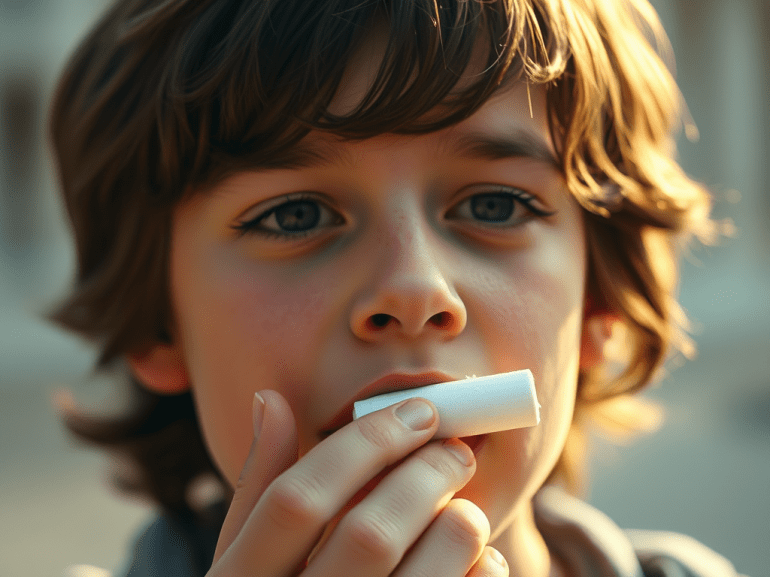
Pica was an unusual problem. A few of the patients I took care of during my thirty-year nursing career experienced it. Essentially, Pica is consumption of non-food items. Ice, clay, dirt, chalk are among common substances I have known patients to eat. Constant ice-eating can lead to anemia. I even knew of one patient who snitched a bag of clay from another patient who had dug it from a clay bank near her home. Afterward, the clay bank lady began peddling her bags of clay to other patients. The cause of Pica is poorly understood. It may arise from dietary deficiencies or cultural influences. There is no effective treatment, though patients are usually prescribed multivitamins. I did once have a patient who came in complaining of severe belly pain. During surgery, she was found to have eaten enough clay that it had hardened like a brick. She was totally obstructed and ended up with a temporary colostomy.

Nurses’s Hands

Nurse’s hands are not known for their beauty. More than likely, they are dry, being washed dozens of times a day. Frequent use of lotion can not keep these skilled hands supple and dewy. Nails are most often short, since longer nails interfere with the sensitive touch necessary to perform care. Longer nails are a detriment to gloves essential to protect both nurse, patient, and the environment.

Here you see a man’s strong hands that have cared for so many critically ill patients. Their strength gives no hint of the arthritis he endures daily as he cares for patients. His patients never know os of pain.

This is my hand with its square palm and short ringless fingers. Even though I’ve been retired for years, I find longer nails interfere with my daily tasks. My hands cared for countless patients and charted thousands of words.

This young nurse’s hands are remarkable for their youth and beauty, showing her recent manicure. Nevertheless, as I watched her at work, I was grateful to see her compliance with gloving and handwashing. She professionally and expertly administered my immunizations.

A compassionate nurse comforts an aged patient here. That may be the strongest medicine she has to offer. Many times I sang or talked to my comatose patients, not knowing whether or not I was heard. Numerous times, I’ve had a dying patient call me “Mama.” I never corrected them, thinking perhaps they were seeing Mama.

Help! I’ve Fallen and I Can’t Get Up!

My husband I are both retired RNs so we frequently spot errors in commercials.  The other evening, one of those frequent “Help, I’ve fallen and can’t get up!” commercials came on.

Bud watched the poor woman intently for a moment and said, “I know damn good and well she didn’t fall.  She didn’t piss her pants.”

He knows whereof he speaks, having worked on a physical rehab floor for more than twenty years.

Tough Guy Bob

Several years ago I hired a remarkable young man. He’d completed a rigorous drug rehab program and afterward managed to convince the Louisiana Board of Nursing to allow him progress into clinical courses despite a history of drug use. He was concurrently monitored by the impaired nurse program and passed many random drug tests. He was required to attend regular Narcotics Anonymous Meetings and was given no assurance of licensure upon successful completion of all these requirements. He soldiered successfully through all this and was licensed.

I was fortunate enough to hire Bob in my acute dialysis unit. An excellent nurse, he was a quick learner and valuable staff member. In addition to nursing, he had a passion for music and was deeply involved in his church’s music ministry. I was fortunate to have him on my staff for a couple of years. I asked him how he was able to resist the lure of drugs. He told me he’d traded drugs for the high of music. I really learned a lot from him.

Some time later, my husband and I ran into Bob at a music store. I was so happy to see him, I hugged him tightly and kept my arm around him for a bit. He was clearly uncomfortable and kept looking at Bud. It had never occurred to me that a young black man might be uncomfortable being hugged by an older white woman accompanied by her husband. Of course, I introduced them and told Bob, Bud knew how much I thought of his work and accomplishments. I am so grateful to have known Bob.