

JAMESTOWN.
Female convicts transported from English prisons arriving in Jamestown, Virginia as indentured servants, although often becoming wives in mass weddings with the male settlers: colored engraving, 19th century.
Immediately upon disembarking, Andrew and Molly along with others not already engaged were escorted to warehouse lodgings and given beer and a heartening stew of squash, beans, corn, yams, and meat, their first meat in seven weeks.
The men and women were separated and instructed to choose clothing from a pile of castoffs before bathing and delousing with some herbal concoction whose noxious odor was helpful in warding off mosquitoes. When the men were led off to be locked away for the night, Molly wept and clung to Andrew, fearing she’d never see him again. She had no faith in the agent’s assurance that they’d be placed together. Despite her grief, she slept hard in the deep hay that served as bedding for the exhausted women. For the first night in months, she didn’t fear assault.
The next morning, the colonists gathered just after daybreak to choose among servants. Molly, along with the other women, ate a hearty breakfast of beer and bread, made a hasty toilet, and prepared for selection, praying Providence would be kind. As the men turned out, Andrew hurried to Molly’s side.
As the selection began, the agent presented the bonded, praising their health, intelligence, and skills, real or concocted on the spot. Some were labeled distillers, others as cabinet makers, or boat-builders. True to his word, he proclaimed Andrew and Molly must go to the same master. To their surprise, they heard the agent confide to Master Wharton that Andrew was a skilled blacksmith and that Molly could weave and spin.
The colonists were legally forbidden to forge their own tools and ironwork, so this would have to be a clandestine operation. Like most forbidden practices, smithing was made more attractive.
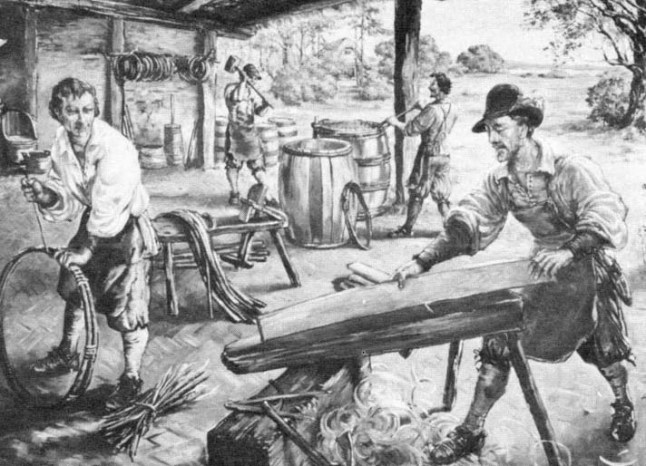
Encouraged to think he was engaging a blacksmith and a woman who could weave and spin, Master Wharton spoke directly to Andrew. “You look right, enough. My blacksmith will soon work free, but might have long enough to teach you some. Do you think you can pick it up fast? I’ll not tolerate a slacker. If you give me your pledge, I’ll take you and your wife. Should you fail, I’ll sell your bond.”
“I’ll not fail if you take us both, that I swear.” Andrew asserted, looking him in the eye. “I’m no smith and my wife never learned weaving nor spinning. I’d not have you expect that. I know farming and she tended dairy and is skilled at butter and cheese-making, nothing more.”
“I have no need of a weaver, just a housekeeper. I’ll bond you. You’ll get lodging, food, and a new suit of clothes now and once a year. You will work dawn to dusk every day with Sunday for worship and rest. Give me value and we’ll have no trouble.” Their new master strode off to tend his business, leaving them to wait together.
images downloaded from internet

 After filling their starving bellies with greasy stew and quarts of ale, Andrew and Molly signed away their next four years, too sated to consider the uncertainty of the life facing them. In fact, they were signing away the certainty of poverty, degradation, and possible imprisonment had they remained.
  Andrew Wharton was born to be a farm servant like his father and grandfather before him, the line extending back much further than anyone bothered to remember. His work was not a choice; he was born to work Hampton Grange and expected to die there. The only surprise was when pretty Molly Peace chose him. Ecstatic in his luck, he couldn’t believe the rollicking dairy maid favored him above all the hopeful lads pursuing her when he’d done no more than sneak shy peeks at her in Chapel. The confusion of love and glorious sensuality overwhelmed the young man who’d never contemplated the possibility that life could hold pleasure. Molly saw joy in everything, the sweet breath of the cows she milked, the warmth of the sun on her face, and the sweet sent of the hay she bundled, not seeming to notice the manure in the cow’s tail, the slogging rains, or the sneezing brought on by the hay.



 Nutsrok