
I Am So Sorry, Rosie. I Didn’t Know.

black maidThis is updated post. Please excuse the offensive word used in context in this story.

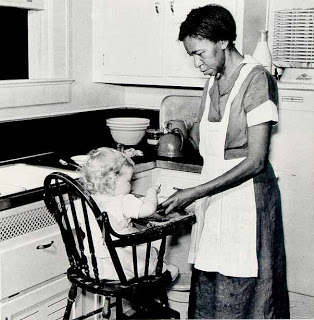
Rosie was beautiful, the first black woman I ever knew.  She tolerated my stroking her creamy, caramel-colored legs as she washed dishes or ironed. Her crisply starched cotton housedresses smelled just like sunshine.  Normally, I trailed my mother, but on the days Rosie was there, she couldn’t stop suddenly without my bumping her.  Rosie ate standing up at the kitchen counter with her own special dishes while I ate at the kitchen table.  I wanted to eat standing at the counter with her but wasn’t tall enough.  One day as we ate, she told me she had a little girl.  Pearl was three years old, just my age,  Three years old.  I was enchanted.  “Is she a nigger girl?”  Rosie’s face fell.

“Don’t say ‘nigger.’  That’s a mean word. Say ‘colored’.”  I was surprised Rosie corrected me, not knowing I’d done anything wrong.   I was also surprised to hear “nigger” was a mean word.  I’d heard it many times.

Rosie said no more.  I was relieved when she seemed to have forgiven me, soon allowing me to hug her and stroke her beautiful, smooth legs as she worked along.

It was years before I realized how deeply I’d hurt her.  I am so, so sorry Rosie.  I wish I could unsay that awful thing.

Addendum; I was raised in the deep South, before the Civil Rights Struggle began. My home was as prejudiced as any. I went to a segregated school and knew a black child. Should we meet on the street on the street, we just stared open-mouthed at each other. I believed the lie until I went to college and made black friends. My eyes were opened! Why is is so hard to learn that people are just people?

Tough Guy Bob

Several years ago I hired a remarkable young man. He’d completed a rigorous drug rehab program and afterward managed to convince the Louisiana Board of Nursing to allow him progress into clinical courses despite a history of drug use. He was concurrently monitored by the impaired nurse program and passed many random drug tests. He was required to attend regular Narcotics Anonymous Meetings and was given no assurance of licensure upon successful completion of all these requirements. He soldiered successfully through all this and was licensed.

I was fortunate enough to hire Bob in my acute dialysis unit. An excellent nurse, he was a quick learner and valuable staff member. In addition to nursing, he had a passion for music and was deeply involved in his church’s music ministry. I was fortunate to have him on my staff for a couple of years. I asked him how he was able to resist the lure of drugs. He told me he’d traded drugs for the high of music. I really learned a lot from him.

Some time later, my husband and I ran into Bob at a music store. I was so happy to see him, I hugged him tightly and kept my arm around him for a bit. He was clearly uncomfortable and kept looking at Bud. It had never occurred to me that a young black man might be uncomfortable being hugged by an older white woman accompanied by her husband. Of course, I introduced them and told Bob, Bud knew how much I thought of his work and accomplishments. I am so grateful to have known Bob.

Charley’s Tale Introduction

This is the first episode in a serial I posted several years ago. I am dusting it off, Charley tugs at my heart, reminding me,”Don’t shut me out! I have a story to tell.”

The outsider looking in could have been forgiven for assuming Charley was born to a life of ease. Unfortunately, things don’t always work out that simply. True, she was the much-hoped for daughter born to a prominent couple, her father a doctor and mother a wealthy socialite. She knew the joy of two adoring older brothers, an admiring little sister, a doting grandmother, and a cousin who left her a valuable estate.
Given that mix, the fates dusted in a bit of trouble to complicate the life to which she was destined. At birth, the father who delivered her, noted an oversized clitoris which he snipped before presenting her to her mother, thinking he’d spared her a life of confusion. Unfortunately, it had just the opposite result. Gender identification goes a lot deeper than outward appearances, as he learned over time.

Not only that, Ellen, Charley’s narcissistic mother was repulsed by her perceived imperfection of her child. Ellen and Charley never bonded due to her mother’s rejection. Little Charley was cherished by the rest of the family and nurtured by Cora, the family’s maid. Her grandmother and Cousin Jean adored her. Early on Grandmother Geneva and Cousin Jean recognized the child’s nature and allowed her the freedom to express it.

Charley’s nebulous connection to her mother was severed on the occasion of her baby sister’s birth. Ellen developed post-partum psychosis, attempted murder, and lived out the short period of her remaining life in a state hospital. Unresolved psychic trauma was to follow Charley from that point on.

Life has never been easy for an intersexed child. It was likely for a well-meaning surgeon to assign the child a female identity, if anything at all was done. Unfortunately, this was as apt as not to be wrong. So it was for Charley. The child who would have been celebrated as a robust little boy was expected to behave as a dainty little girl. The confusion was overwhelming. From the time Charley’s mother went into the asylum, Cora and Grandmother Geneva assumed maternal roles with both girls. Geneva and the children passed the long summer weeks at the farm and the lake house where Geneva encouraged Charley’s relationship with the Washington family who maintained the farm, knowing they’d likely be in her life for years. They were good people.

Josie, the girl who’d helped cared for the girls since Ginny’s birth had married Bobby Washington who’d grown up working the farm along with his father Robert. Since the dairy barn was no longer in use, Geneva gave Robert permission to tear it down and salvage the materials to build a cabin for the newlyweds on the land Cousin Jean left him. They worked evenings till a tin-roofed three-room shotgun house stood proudly under a pecan tree with the requisite toilet about one hundred feet down the hill. It was close enough Bobby and Josie could share the older folk’s well. It was a fine thing for a young couple to start out with a house on eighty acres they could look forward to inheriting one day.

Life was a succession of peaceful days till school attendance required Charleys to spend her days at her father’s house. Cora was devoted to both girls, spending a great deal of time with them, serving as a buffer to Ellen. Geneva lived just a few blocks over, so they frequented her home as well. Charley enjoyed several years of relative peace till she reached the age of cruelty.

Charley’s Tale Part 23

Charles staggered into the kitchen under a mountain of farm goods expecting exclamations of joy. Instead, the normally voluable Cora met him with pursed lips.  Clearly disapproving, She announced.  “The Reverend Mason is waiting for you in the parlor.  He says he’s here on business that can’t wait. I’ll bring in coffee and coconut cake in a minute.”  Cora had never made a secret of her feelings about Dr. Mason since he’d dodged her congregation’s request to purchase the old Presbyterian sanctuary when the Presbyterians built a new new one, especially after it stood empty for three years till being turned into apartments and a thrift store.

Though Charles still golfed and served on the school board with Reverend Mason, though he’d not invited him into his home since the pastor refused to sell to Cora’s congregation, responding.  “I don”t think the neighbors are ready for a black congregation.”  Charles didn’t want Cora to have to serve a man with his prejudice.

“This is a surprise, Joe.  Have a seat.  The coffee should be ready in a minute.  Cora put it on before she left.   I’ll just duck out to the kitchen and get it.” Charles greeted him, knowing Cora would be listening at the kitchen door, anxious to learn the pastor’s business.

” I can’t stay, Charles.  I just came by to to let you know about the schoolboard’s decision.” Reverend Mason replied, avoiding Charles’s eye.

”What decision?  The schoolboard’s meeting is not until next week, is it?” Charles said.  Something wasn’t right.

”A special meeting was called.” Reverend Mason replied.

”A special meeting and I wasn’t notified.”  Charles spoke flatly.  “What’s your business?”

Dr Mason answered miserably.  “You know that last year the board voted extend from eleven to twelve years for graduation starting next fall.   Since Charlotte only lacks two credits to graduate, the board voted to award her diploma now, instead of making her attend another year.  I have her diploma with me, all signed by the board.  Would you like me to present it to her?”

Charles was stunned but fortunately, not speechless.  “I would NOT!  So you don’t want Charley in your school!  Charley is the same person,now, he was a few weeks ago.  He has never caused any problems and suddenly the board thinks he is unfit to attend!  How can they justify this?”o

”This is miserable for us all, Charles, but we have to consider what’s best for everyone.  Many parents have expressed their concerns over sports teams use of locker rooms.  Students do not feel comfortable with Charley as things are.  Charley might not be comfortable either.  We have to think of what’s best for ALL students, Charley included.”  Dr. Mason felt righteous in his thinking.

”You pompous, Jackass!  Did it not occur to you that we are well-aware of the problem?  We live close enough to school that Charley could have come home when necessary.    Please tell the school board they won’t be bothered by me or Charley in the future.  You and your board must feel you have a divine guarantee of a perfect life to come to me with this.  Please show yourself out!”

Charley’s Tale Introduction

This is the first episode in a serial I posted several years ago. I am dusting it off, Charley tugs at my heart, reminding me,”Don’t shut me out! I have a story to tell.”

The outsider looking in could have been forgiven for assuming Charley was born to a life of ease. Unfortunately, things don’t always work out that simply. True, she was the much-hoped for daughter born to a prominent couple, her father a doctor and mother a wealthy socialite. She knew the joy of two adoring older brothers, an admiring little sister, a doting grandmother, and a cousin who left her a valuable estate.
Given that mix, the fates dusted in a bit of trouble to complicate the life to which she was destined. At birth, the father who delivered her, noted an oversized clitoris which he snipped before presenting her to her mother, thinking he’d spared her a life of confusion. Unfortunately, it had just the opposite result. Gender identification goes a lot deeper than outward appearances, as he learned over time.

Not only that, Ellen, Charley’s narcissistic mother was repulsed by her perceived imperfection of her child. Ellen and Charley never bonded due to her mother’s rejection. Little Charley was cherished by the rest of the family and nurtured by Cora, the family’s maid. Her grandmother and Cousin Jean adored her. Early on Grandmother Geneva and Cousin Jean recognized the child’s nature and allowed her the freedom to express it.

Charley’s nebulous connection to her mother was severed on the occasion of her baby sister’s birth. Ellen developed post-partum psychosis, attempted murder, and lived out the short period of her remaining life in a state hospital. Unresolved psychic trauma was to follow Charley from that point on.

Life has never been easy for an intersexed child. It was likely for a well-meaning surgeon to assign the child a female identity, if anything at all was done. Unfortunately, this was as apt as not to be wrong. So it was for Charley. The child who would have been celebrated as a robust little boy was expected to behave as a dainty little girl. The confusion was overwhelming. From the time Charley’s mother went into the asylum, Cora and Grandmother Geneva assumed maternal roles with both girls. Geneva and the children passed the long summer weeks at the farm and the lake house where Geneva encouraged Charley’s relationship with the Washington family who maintained the farm, knowing they’d likely be in her life for years. They were good people.

Josie, the girl who’d helped cared for the girls since Ginny’s birth had married Bobby Washington who’d grown up working the farm along with his father Robert. Since the dairy barn was no longer in use, Geneva gave Robert permission to tear it down and salvage the materials to build a cabin for the newlyweds on the land Cousin Jean left him. They worked evenings till a tin-roofed three-room shotgun house stood proudly under a pecan tree with the requisite toilet about one hundred feet down the hill. It was close enough Bobby and Josie could share the older folk’s well. It was a fine thing for a young couple to start out with a house on eighty acres they could look forward to inheriting one day.

Life was a succession of peaceful days till school attendance required Charleys to spend her days at her father’s house. Cora was devoted to both girls, spending a great deal of time with them, serving as a buffer to Ellen. Geneva lived just a few blocks over, so they frequented her home as well. Charley enjoyed several years of relative peace till she reached the age of cruelty.

I Am So Sorry, Rosie. I Didn’t Know.

black maidPlease excuse the offensive word used in context in this story.

Rosie was beautiful, the first black woman I ever knew.  She tolerated my stroking her creamy, caramel-colored legs as she washed dishes or ironed. Her crisply starched cotton housedresses smelled just like sunshine.  Normally, I trailed my mother, but on the days Rosie was there, she couldn’t stop suddenly without my bumping her.  Rosie ate standing up at the kitchen counter with her own special dishes while I ate at the kitchen table.  I wanted to eat standing at the counter with her but wasn’t tall enough.  One day as we ate, she told me she had a little girl.  Pearl was three years old, just my age,  Three years old.  I was enchanted.  “Is she a nigger girl?”  Rosie’s face fell.

“Don’t say ‘nigger.’  That’s a mean word. Say ‘colored’.”  I was surprised Rosie corrected me, not knowing I’d done anything wrong.   I was also surprised to hear “nigger” was a mean word.  I’d heard it many times.

Rosie said no more.  I was relieved when she seemed to have forgiven me, soon allowing me to hug her and stroke her beautiful, smooth legs as she worked along.

It was years before I realized how deeply I’d hurt her.  I am so, so sorry Rosie.  I wish I could unsay that awful thing.