Andrew and Molly Part 3

img_1740“What have we gotten into?”  moaned Andrew after three days locked in the hold.  “Why did we Ever do this?  I’ve got to figure a way out.”

“No!  We wouldn’t be here if we had any other choice.  We were starving and near to death.  Things will have to be better in the colony.  We’ll be on a farm again and free with land in four years.  It’s the only way.”  Molly’s optimism was wearing thin, but she held out hope.  “Listen!  We’re moving!”  Sure enough, the chains creaked as the anchor was lifted and they were obviously leaving the harbor.    

An hour or so later, after they were too far to swim for shore, the doors to the hold were thrown open.  The incarcerated rushed for the door and stood on deck for a last, long look at England.  Many wailed as land slipped out of sight, knowing they’d never see home again nor maybe even the new country.

Time on deck made the long journey more bearable, except for the miserable days of rain and storms. though it didn’t improve the quality or quantity of the rations.  Fighting and attacks were common in the hold, though few had anything but weavilly biscuits to steal.  Coughing and moaning broke their guarded sleep.  

Andrew never left Molly for a moment, knowing she’d be assaulted.  Almost every morning, a cold body or two was pulled from the hold.  The stench became more horrendous as the weeks passed.  Neither suffered from sea-sickness till mid crossing when a storm raged.  Both wretched miserably, not even attempting to make it to the bucket.  Many passed and were slid into the raging sea.  Andrew would have gladly sought death had it not been for Molly.

Finally, the weather cleared and they were able to go above board again, feeling hope for survival. After seven weeks, a shout rang out. The Jamestown Colony was sighted!

Maybe they’d live after all!

Links to Parts 1 and 2

https://atomic-temporary-73629786.wpcomstaging.com/2017/01/04/andrew-and-molly-part-1/

https://atomic-temporary-73629786.wpcomstaging.com/2017/01/06/andrew-and-molly-part-2/


Andrew and Molly Part 1

img_1700Andrew Wharton was born to be a farm servant like his father and grandfather before him, the line extending back much further than anyone bothered to remember.  His work was not a choice; he was born to work Hampton Grange and expected to die there.  The only surprise was when pretty Molly Peace chose him.  Ecstatic in his luck, he couldn’t believe the rollicking dairy maid favored him above all the hopeful lads pursuing her when he’d done no more than sneak shy peeks at her in Chapel.  The confusion of love and glorious sensuality overwhelmed the young man who’d never contemplated the possibility that life could hold pleasure. Molly saw joy in everything, the sweet breath of the cows she milked, the warmth of the sun on her face, and the sweet sent of the hay she bundled, not seeming to notice the manure in the cow’s tail, the slogging rains, or the sneezing brought on by the hay.

Their life at Hampton Grange offered the couple little beyond a small hovel, milk and cheese from the dairy, a daily ration of bread and beer, the privilege of wood gathering, and scant wages. Once a year, they were due a measure of wool for their own use. Compared to the conditions many experienced, it was adequate under Old Squire John’s management. Left to his gambling heir, it was soon lost to bankruptcy, leaving them adrift.

Andrew and his new wife Molly found themselves standing in the freezing rain wearing all they owned before a pub in Liverpool. After three days’ starving, they were easily persuaded to join an agent for The Virginia Club for food and drink. With no prospects, they were Signed papers of indenture pledging the next four years of their lives in exchange for passage to the Jamestown colony in Virginia. For their volunteer bondage they would receive lodging, food, and clothing, the quality to be determined by their master. They were fortunate in being bound four years. Most were bound seven years. including involuntary prisoners or abductees. At the end of their service, they were entitled to tools, money, and land. Like so many other indentured servants, they could expect years of unrelenting labor and uncertain treatment. In truth, the next few years wouldn’t be greatly different to the life they were accustomed to if they were fortunate enough to be bound to a good master. At least they’d have a start at the end of their time.

Bumps in the Road

Though I most frequently talk about the amusing things our family experienced, of course there was another side.  Mother is a lovely lady, cheerful, fun-loving, and totally centered on her family, still at ninety-six.  She is and always was, scatterbrained, a trait she generously shared with her children.  It provided comic relief in otherwise hard times and sometimes precipitated hard times. I know now Daddy was bipolar, though he never went off the deep end.  As a young man, he was a binge drinker and gambler, though he gave it up to save his marriage.  Before setting out to establish a farm in his early forties he was always hunting or hanging with his cronies.  When I was a small child, Billy and I frequently got to tag along.  It was heaven! Upon his return from work we rushed joyously rushing to meet him shrieking, “Daddy’s home! Daddy’s home.” Then we’d likely be off for an adventure. Unfortunately, for his older two girls, Daddy made a point of  establishing an emotional and physical distance as we approached puberty.  He wanted no hint of inappropriate behavior in his family.  God only knows how he was influenced by his early life. 

About the time Daddy was nine, his sick father had moved into the home of his own mother. Suffering with a brain tumor, he lay abed for four years, unable to do anything for his poor family.  That grandma wanted nothing to do with her daughter-in-law and the starving children.  The fourth of seven, Daddy, along with his two older brother’s, took any work they could get, often for nothing more than the chance to put their feet under someone else’s table.  Daddy said one day he chopped bushes all day for a bag of meal. 

None of his father’s family wanted to be saddled with their ravenous appetites either.  They were all struggling. Daddy told of helping his uncle with the harvest one late fall day.  The three barefoot boys got there before daylight, hoping for breakfast.  Their shoeless condition was not slovenliness.  They’d have gladly worn shoes had they had them. Sadly, his aunt was plunging the breakfast dishes in hot water as they shuffled up to the back door.  She’d had no intention of feeding them, shooing them out to the field with Uncle Robert and their cousins. At noon, Annie Mae sent one of her girls to the field with a bag of biscuits slathered with cold gravy and a jug of water.  The biscuits were bland but filling, but the boys had been hoping for milk, and maybe a cookie or a pear

The weather turned about four that afternoon, a cold sleety rain.  The hungry boys followed their uncle to the house, looking forward to a hot supper and a cozy bed for the night.  Their mother wouldn’t be worried, knowing they were at Uncle Robert’s.  Surely, Uncle Robert would hitch up the wagon and bring them home in the morning.  They didn’t have shoes or coats!  In the days before their Daddy got sick, they’d often stayed at Uncle Robert’s with their cousins.

Again, the heartless Annie Mae met them at the door.  “You boys git on home before it gits any worse.  Your Mama’s gonna be worried about you.” Aunt Annie made it clear they and their appetites had no welcome at her table. Uncle Robert gave them each a quarter and a tow sack full of the corn they’d just helped harvest. He sadly watched his nephews head to their poor home, clearly having had his orders. The shoeless boys cried with misery as they gingerly stumbled the long three miles home on frozen feet.  Daddy vowed then never to turn a hungry visitor away.  He never did.  Mother was often angered when Daddy insisted she come up with a meal for drop-in company, even hours after mealtime.  It’s surprising how often Daddy’s offer was accepted, especially  by ne’er do wells. Meanwhile, Mother fumed at the stove. “Nobody with any raising would expect someone to drop in and be offered a meal!” Mother never had sandwich makings or quick food so a meal meant cooking.

On a further further note, the penurious Annie Mae made each of her own children raise heir own garden contributing to the family larder.  She benefitting further, selling off the excess.

Grandpa and I /Guest Post from Erika Kind

I am so delighted that my friend Erika Kind agreed to do a guest post for me.  I have read and enjoyed hearing of the wonderful, warm relationship she had with her grandfather.  Wouldn’t it be a wonderful world if we all had a person with whom we share unconditional love and the bond that is never broken?

Grandpa and I

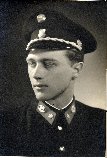
My grandfather was born 1927 as the only child of his parents. As far as I know he had a happy childhood. But his good times ended before he was even 20 years old when he was conscripted for WW II. He often told us about the war, his struggles in captivity and starving till he was just skin and bones. My grandfather was Austrian.   After Hitler invaded Austria they had to fight for Germany.  At the end of the war when all the horrible facts were revealed to the general public, he was shocked to no end to learn what he had been forced to fight for. Due to infections and lack of food, he developed cirrhosis of the liver which eventually killed him. My grandfather was a policeman all his life,. He was living and working in Vienna. Here is a photo of him with his father. Grandpa and Father

My “Opapa”, as we called him, was a tall, handsome man. He was married twice. His first wife was my mom’s mother. They got divorced when my mother (also an only child) was 11. When I was born, I was his pride and joy. I am sure that we are true soul mates. We had this certain connection. He was a young grandpa at the age of 43. When I was about 5 months old my parents moved with me to another part of the country about 600 km away from Vienna. Afterwards, I only saw my grandfather when he came for vacation for two weeks a year or when we went to Vienna for 3 weeks during the summer break. Grandfather Handsome That’s me and grandpa. Grandpa and Baby Erika My grandfather did everything for me. He always knew how to cheer me up when I was mad or sad. I loved the way of making me laugh, imitating voices and roles of popular comedians. He loved music. We always sang as we walked through the woods. He also kept me entertained imitating instruments like drums and trumpets. He built a huge model railroad layout for me, though it took him years since he could only work on it during his two week vacation with us. Grandpa knew everything about the Austrian history, really EVERYTHING! Whenever we walked around Vienna, went to a museum, or visited a castle or burg, he was like a historic almanac. Of course he not only knew about the historic persons and how everybody was related, but all the data of all happenings. Naturally, I did not appreciate it a bit. As a child or teenager, I did not listen, finding it boring.  Only days after he had died, a question about history came up. I reflexively thought I could ask Opapa… and started crying the next moment. During my teenage times I pulled back and didn’t talk a lot. I was in a lot of pain and didn’t let anybody in, not even my grandfather. I know that I was not nice at times and even mean. Grandfather never ever said one single word. He never acted hurt or annoyed. Never! I guess he was the only person in my whole life who never made me feel guilty. He just let me be. Five days before he died he called my mother. I was planning a visit a week later and he wanted to catch up with data. He wasn’t well at that moment and I am pretty sure he knew what was coming. When he called I was waiting for my sister to get ready for our Volleyball practice. We were already late. I did not take the call and just told my mom what to tell him. In the end I could have taken the call because they ended it before I left.  I missed my last opportunity to hear his voice. It took me many years to forgive myself for missing this chance. My grandfather died in 1990 at the age of 62.  In my mind, I still see his smiling face and  his curly grey hair going weird in the wind.  I still see the way he was dressed, the way he walked and moved and hear his special laughter.   Most of all I still feel his loving spirit!Grandpa         Erika for post