Easter egg hunts with my cousins were a lot more like cage boxing than gentle competitions. I had more than forty first cousins, mostly wild animals and heathens. By the time their parents herded them to the scene of the festivities, their hellions had exhausted them so just opened the car doors and all Hell broke loose. Exhausted from defending themselves and their babies on the ride over, it was every man for himself. God help anybody in the way,
The monstrous kids ripped through the house under the guise of needing the bathroom and a drink of water, destruction in their wake, before being cast out into the yard like demons into swine. Actually, they were cast out onto the other cousins. We’d get a baseball or football team going, all the big kids on one team, so the little ones never got a chance to bat, or got mowed down in football. They’d go squalling in to their daddies who’d come out long enough to straighten us out a vague semblance of fairness, often lingering to play a while.
Once the egg hunt started, it was chaos. It was survival of the meanest. The horrendous kids showed no favoritism between their sibligs and cousins shoving all the smaller kids down, stomping the hands of little ones reaching for eggs. The event was a melee of squalling, battered young ones, and sometimes even a few bloody noses. More than a few times they hurled eggs. My antisocial cousin, Crazy Larry, kept trying to pee on us while we were distracted by the madness.
One aunt in particular didn’t think her big kids ought to have to share at the end of the hunt, even though they’d hoarded a basketful and babies had none.
“They found ‘em!” my aunt asserted, sticking up for her devilish offspring.
It didn’t matter that she’d only brought a dozen eggs to the hunt. She resented the host confiscating her evil progeny’s bounty and redistributing them so every kid got a few, and converting most to the Easter Delight of deviled eggs.
Ah, family. Better get busy. I have company coming. But not Crazy Larry. He’s in the witness protection program.
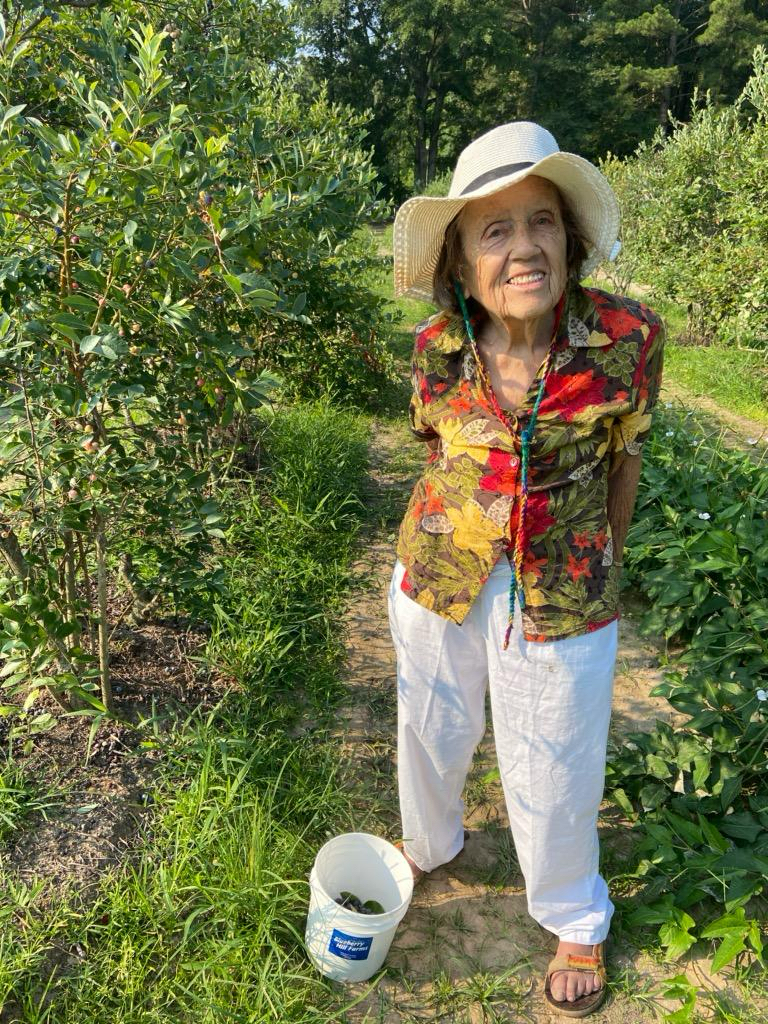
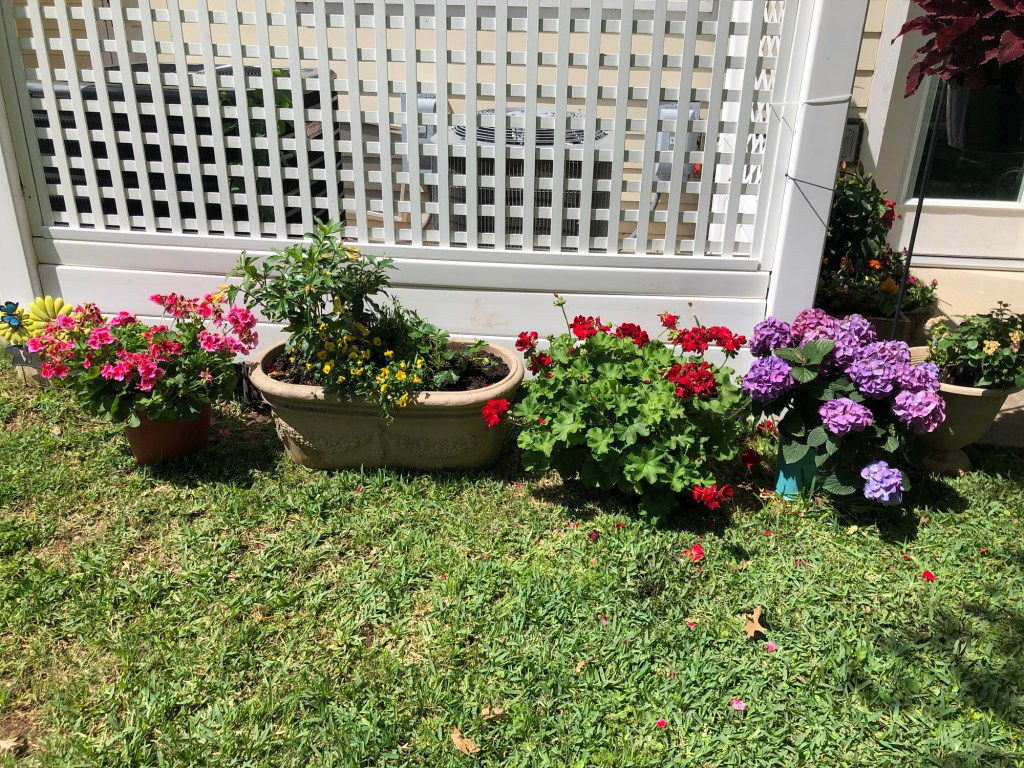
Mother is ninety-seven and recently moved to an independent living facility. She has happily transformed her patio into a garden, already. She is at the garden center grabbing plants every time she can finagle a ride. My sister ,Connie and her husband, Tim, built this beautiful garden box and filled it with luscious flowers. They are currently her favorite family.
She is nurturing these beauties along a trellis adjacent to her patio. Mother had a lush garden at her little cottage before she moved here but I do believe she’s gone over the edge now.
Sadly for my budget, I inherited her obsession. I am on my way out now to put out hydrangeas and petunias.
JAMESTOWN. Female convicts transported from English prisons arriving in Jamestown, Virginia as indentured servants, although often becoming wives in mass weddings with the male settlers: colored engraving, 19th century.
Immediately upon disembarking, Andrew and Molly along with others not already engaged were escorted to warehouse lodgings and given beer and a heartening stew of squash, beans, corn, yams, and meat, their first meat in seven weeks.
The men and women were separated and instructed to choose clothing from a pile of castoffs before bathing and delousing with some herbal concoction whose noxious odor was helpful in warding off mosquitoes. When the men were led off to be locked away for the night, Molly wept and clung to Andrew, fearing she’d never see him again. She had no faith in the agent’s assurance that they’d be placed together. Despite her grief, she slept hard in the deep hay that served as bedding for the exhausted women. For the first night in months, she didn’t fear assault.
The next morning, the colonists gathered just after daybreak to choose among servants. Molly, along with the other women, ate a hearty breakfast of beer and bread, made a hasty toilet, and prepared for selection, praying Providence would be kind. As the men turned out, Andrew hurried to Molly’s side.
As the selection began, the agent presented the bonded, praising their health, intelligence, and skills, real or concocted on the spot. Some were labeled distillers, others as cabinet makers, or boat-builders. True to his word, he proclaimed Andrew and Molly must go to the same master. To their surprise, they heard the agent confide to Master Wharton that Andrew was a skilled blacksmith and that Molly could weave and spin.
The colonists were legally forbidden to forge their own tools and ironwork, so this would have to be a clandestine operation. Like most forbidden practices, smithing was made more attractive.
Encouraged to think he was engaging a blacksmith and a woman who could weave and spin, Master Wharton spoke directly to Andrew. “You look right, enough. My blacksmith will soon work free, but might have long enough to teach you some. Do you think you can pick it up fast? I’ll not tolerate a slacker. If you give me your pledge, I’ll take you and your wife. Should you fail, I’ll sell your bond.”
“I’ll not fail if you take us both, that I swear.” Andrew asserted, looking him in the eye. “I’m no smith and my wife never learned weaving nor spinning. I’d not have you expect that. I know farming and she tended dairy and is skilled at butter and cheese-making, nothing more.”
“I have no need of a weaver, just a housekeeper. I’ll bond you. You’ll get lodging, food, and a new suit of clothes now and once a year. You will work dawn to dusk every day with Sunday for worship and rest. Give me value and we’ll have no trouble.” Their new master strode off to tend his business, leaving them to wait together.
The site of Jamestown Colony was nothing like the home they’d left. They’d felt pride in their natal farm though they’d belonged to it, not the other way around. Born to its manicured meadows, neat hedgerows, and trim outbuildings, its upkeep had been a part of every day. Born to thatched stone cottages in the shadow of the imposing barns and carriage house, they’d attended the chapel attached to the mossy, old manor house. They felt pride of place by virtue of family tradition; it was their work and the work of their fathers before them that stretched behnd them.
They were often in need and sometimes Ill-treated, but they had a tie to the land. Had not fate intervened, their children would have worked and lived as they had.
Jamestown of 1643 was not a welcoming site. The vessel had tied to a crude wooden wharf. At the site of the rough timber fence surrounding the town, they didn’t have to be warned not to rush to disembark. A rutted, muddy trail led into the fort of nondescript houses. Blazing sun beat down as men in tattered rags, both black and white, gathered to await their turn unloading cargo from below. Mosquitoes buzzed around their heads and bore down, appreciative of the new blood.
The humid air was thick with the smell of newly-turned earth, smoke, and manure from the enclosed animals.Instead of fields of grain butting up to hedgerows, unfamiliar plots of large-leaf tobacco stood in large patches outside the high walls. Lesser squares of corn , beans, and squash clustered around nearby cabins built close enough that occupants could easily reach the enclosed settlement as needed.
Enormous forests of tall trees pushed up to the farms and fields.
As they surveyed all that lay before them, the forests were most impressive. England’s sparse woodlands could not compare. Though the settlement was raw and unfamiliar, they realized the intimidating forest held the future for those hardy enough to wrest it out. All they had to do was serve out their next four years to claim their portion, not thinking those same forests were home to indigenous people who’d thrived there for millennia.
I think a man thought I was trying to pick him up in the garden center yesterday. Like me, he was perusing the bargain plants. When I noticed he’d snagged a magnificent hydrangea, my plant lust kicked in. I fear he thought I was after him, rather than his plants. I merely coveted his hydrangea,not his person. He fended me off by hastily telling me his wife had just loaded his buggy up. Scorned, I assured him I was only after his hydrangea, not him. Fortunately, I found one of my own, so his was safe. It was the fifth one , I’ve been lucky enough to get this spring, hydrangea, not man, I mean.
I have a voracious appetite for plants but must restrict my expenditures in the interest of staying married, I make frequent visits to the markdown area where my favorite garden center typically marks plants down fifty percent, an extreme temptation. This frequently includes overstocks., a true blessing. My landscape plans are directly influenced by these bonanzas. For example, I had envisioned a purple and fuchsia scenario for one front bed but realized I could be equally happy with the numerous showy pots of purple and gold Wave Petunias I greedily grabbed.
I must confess. Plants lead me into deception. I do my best to keep them out of Bud’s direct view till I get them in the ground. I unload them in the front yard so as not to assault his sensibilities as he pulls into the garage. I’m not always in the mood to discuss the landscaping imposes on our budget. I understand it’s perfectly obvious that I’ve bought plants once they’re in the ground but I still practice this pointless subterfuge.
Gardening also interferes with my writing. I can’t wait to get out and get my hands in the dirt in the morning. My mind totally clears as I dig, plant, and ponder where each plant will flourish. Should a plant look unhappy, I look till I find it a happier niche.
We had an edentulate guest for the last few days. I wouldn’t have otherwise noticed or mentioned this had my little dog not gotten involved. When my guest took her afternoon nap, she opted for comfort and modestly wrapped her dentures in a paper towel and tucked them in her slipper for safe-keeping. Izzy found this fascinating and investigated. He helped himself to the little packet and cuddled up with it in his bed where he hides all his treasures. When my guest awoke and found she’d been robbed, we instigated a search and his prize was confiscated.
We lived nextdoor to a charming toddler for a while. I believe she got the personality quotient intended for the entire family. Abby and her parents came over for coffee with us one morning. I opened my pot and pan cabinet and gave the tiny girl full access, much to her delight. Armed with a sippy cup of milk, a bowl of vanilla wafers, and a couple of wooden spoons, she set to, making a mess of the cookies and milk stirred into the pots. Her tidy mom was appalled at the mess but we hadn’t had a baby playing on our kitchen flooring a long time, so we enjoyed it.
Abby banged the pots and made a destroyed the snacks. When satisfied with her work, she took a long, hard look at the wooden spoons in her possession. With renewed purpose, she examined the larger spoon, toddled over to her mother and shook the spoon in Mom’s face.
Giving her mom a hard look, Abby gritted her teeth, shook the spoon at Mom, and pronounced sternly,” I’m SICK!” Immediately, she stepped up her aggression, “I meat it!” (I mean it!)
Her mother was mortified at Abby’s mimicry. We didn’t even try to explain away our laughing at the toddler’s behavior. We let her take the spoon home with her, figuring it might even the odds.
The train that was going to Knoxville wouldn’t pass by for several hours, so Berthy wandered around the carnival, curious and sometimes repulsed by what she saw. She was uncomfortable because her daddy had told her that carnivals were Satan’s playhouse. She again saw girls wearing short shorts and was tempted to call them to repentance, but the last time she’d done that, there were severe repercussions that took three years out of her life. As she passed the hoochie-coochie tent, she clutched her crystal hard, put a hex on a dime, and gave it to the scantily dressed woman taking tickets. Berthy smiled.
The air was filled with music, laughter, and the tempting smells of carnival food. She was hungry and bought a hot dog with chili but no onions. She hated onions and was suspicious of people who ate them. Up in the mountains, her brothers ate wild ramps they’d find in the woods. They were ten times worse than onions.
She was starting to relax and enjoy the less sinful sights of the carnival. As she was finishing up the hot dog, an overconfident man who obviously thought himself to be God’s gift to women approached her and said, “Hey there, pretty lady. How about you and me take a stroll around the carnival?”
Berthy, cautious, said, “Excuse me? I don’t think so, Mister.”
The man: “Aw, come on now. Don’t be like that. I bet we could have a real good time. I’ll pay for all the rides, food, and sideshows.”
Berthy: (firmly) “I said no. And I mean it. I don’t run around with men I don’t know.”
The man (reaching out and grabbing her arm) “Don’t be so uptight, sweetheart.”
Berthy: (swiftly) “That’s it! How many times do I have to say no?” Without thinking, she stabbed him in the eyes with her fingers, grabbed him by the neck, and knocked him to the ground. A swift and really hard kick to his crotch with her boot settled him down for the evening. Her brother, who’d been in the Army, taught her those tricks. He said the secret was to catch ‘em by surprise before they could react. He warned her that crotch kicks sometimes just enraged men and didn’t always work, so it was essential to have a Plan B. The man: (clutching his groin and groaning) “Hey, why did you do that?”
Berthy: (calmly) “For not taking no for an answer. Now, git outta here a’fore I put my other boot to yore noggin. Hit’s beggin’ for a rearranging, and I think I could move yore face to the backside of yore head. From now on, you remember to treat womenfolk with respect, and you’ll be fine.”
Having had enough of the carnival, Berthy started making her way back to the railroad tracks to wait for the next train. As she did so, she was stopped by a gypsy woman with a colorful scarf and piercing eyes. “Let me tell your fortune,” the gypsy asked, holding out her hand. Curious, Berthy hesitated and nodded OK.
The gypsy took her hand, traced her fingers across the palm, closed her eyes, and murmured softly. After a moment, she looked up, her expression serious. “You will change lives on your journey. Your cats will be safe during your absence from home. Do not be discouraged by the obstacles you face, for there will be many. A higher power guides your path, and you will have an important dream that will help guide you.” Bertha wasn’t impressed and discounted the fortune but was intrigued that the gypsy knew that she had cats.
Berthy thanked the gypsy and continued to the tracks, pondering the fortune. She found an isolated boxcar parked on a sidetrack and hopped in. It was empty, and she found herself alone. She was tired and lay down for a quick nap. She soon fell into a deep sleep and had a strange dream.
In the dream, she saw herself standing on a narrow path on a bank above a raging river. On the other side, she could see a bunch of houses and a church house, all with lights twinkling like stars. The people were laughing and appeared to be happy. She was attracted to the lights, but the river seemed impossible to cross. Between her and the river, there was a barbed wire fence. A lot of people were crawling through the fence, trying to get to the river. Many were getting cut by the barbs and bleeding. Others went on down to the water and tried swimming across. Many people made it across, but others were washed away in the current. Berthy was tempted to climb over the fence but backed off when she realized how wild the river was. And she was filled with doubt. She closed her eyes and whispered a prayer that she’d be protected.
Then, the river’s water began to calm, parting to reveal a narrow path of steppingstones. Filled with wonder, Berthy climbed the fence and started walking across the river. As she did so, several monsters jumped from the water and attempted to knock her off the rocks she was on, but she was able to fight them off. When she recognized that people who had reached the other side were not really happy and were scantily dressed and making lewd gestures, she turned around and climbed back up to the path. On the path were angels, and she followed them to a beautiful home where people welcomed her warmly and offered her food and shelter.
Berthy awoke from the dream with a start, the images still vivid in her mind. She felt that she had been forewarned that her journey to Chattanooga would be filled with temptations and challenges, but she felt a renewed sense of purpose and confidence. And she was determined not to wander from the path. She would be protected as long as she had faith and determination. … The train from Morristown to Knoxville was on schedule. She easily found the track it was on, leaped aboard, and found herself in a boxcar by herself. When she arrived in Knoxville, it was late. She jumped off, headed to an area where some empty boxcars were parked on a sidetrack, and climbed into one. The train to Chattanooga didn’t leave until 5 a.m. the following morning, so she took the blanket from her backpack, set her alarm clock, and fell asleep in the corner.
Knoxville was a key stop on the Southern Railway network, serving both passenger and freight trains. She easily jumped onto a moving boxcar now that she was getting the hang of it. The train started with a noisy jerk and rattled into the night, its rhythmic clatter a soothing backdrop as Berthy rested in a corner of the boxcar. She had the space to herself, the cool night air drifting in through the open door. The events of the previous day played through her mind, from her unexpected reunion with Wanda to the gypsy’s cryptic fortune and the strange dream.
A figure swung into the boxcar as the train slowed down in a bend about twenty miles outside of Knoxville. The stranger moved with a quiet grace; his features obscured by the shadows. Berthy’s hand instinctively went to Hercules, ready to pull it out if needed.
The figure stepped into the light, revealing a tall man with high cheekbones, a neatly trimmed beard, and piercing blue eyes. He wore a black coat and carried a small, beat-up suitcase. He looked cunning and sinister, and Berthy was afraid.
“Good evening,” he said, his voice surprisingly smooth and deceptively calm. “Mind if I join you?”
Berthy eyed him warily but nodded. “Suit yourself. Just keep to yore side, and don’t you dare come near me. I don’t trust people I don’t know.”
The man smiled and settled down across from her. They rode in silence; the only sound was the steady clack of the train wheels. Finally, curiosity got the better of Berthy.
“Who are you, mister?” she asked.
“Call me Lucian,” he replied. “And you must be Berthy. I’ve heard about you.”
Berthy’s eyes narrowed. “Heard about me? From who?”
Lucian chuckled softly. “Word travels fast among those of us who run the rails. I was behind you at the carnival when you bought a hot dog. Where are you going? What’s your story?”
Berthy responded, “I’m going someplace interesting, and it’s none of your business. “And Stories are for friends. And we ain’t friends.”
Elias: “Fair enough. But you might want to watch your back. Not everyone you meet is as friendly as I am. I can take care of you.” There was a coldness in his voice that hinted at a darker nature. He was twirling a silver ring on his finger.
Berthy: “I’ll keep that in mind. Thanks for the warning. But I can handle myself.”
Stranger: “We’ll see about that. Why don’t you share that blanket with me? If we sit close, there’s enough room for two, and we can stay warmer.”
Berthy remained cautious and guarded, thinking the man resembled someone she’d seen across the riverbank in the dream. The stranger continued talking, trying to probe and gain her trust. She was on high alert, and her instinct was to think quickly and stay one step ahead of what the stranger might try. As he stood up and started coming toward her, Berthy said, “Mister, stay where you’re at.”
Lucian acted like he didn’t hear and continued toward Berthy. As he reached his hands forward, she sensed that he was going to grab her, and she said, “I think it’s time for you to git off this train.” Then, she surprised him by leaping up, screaming in his face, and pushed him towards the open door of the moving train. He lost his balance, flailed his arms, and tried to grab onto something, but it was too late. He tumbled out, his face a mix of shock and anger. He hit the gravel by the side of the track and rolled…and the train continued speeding into the night. She threw his suitcase out the door and took a deep breath, knowing she had made the right decision to protect herself. The night got quiet again, but she remained vigilant, aware that danger could be anywhere.
She tried to go to sleep, but she couldn’t shake the look on the stranger’s face as he fell into the darkness. She wondered if he’d been hurt in the fall. She worried that he might still be able to find her somehow and harm her, but after a while, the rhythmic clatter of the train tracks soothed her nerves, and she dozed off. As the train neared the next stop, Berthy jumped off the train before the trainyard in case railroad bulls were inspecting the boxcars. Her eyes darted around, scrutinizing every angle. She kept her back to the wall, ensuring no one could sneak up on her. She wondered if the stranger might have gotten back on the train and could be looking for her. On high alert, she told herself, “Stay calm. Just keep moving.” Nothing happened, and the coast was clear. As the train started to move again, she hopped back into the boxcar. From that time forward, Berthy’s hyper-vigilance becomes a constant companion, a survival tool. She would trust no one and rely on her instincts to navigate the dangers lurking around every corner. The uncertainty of the stranger’s fate haunted her, but it also sharpened her resolve to stay one step ahead of all strangers. And react quickly before they could get near her. It was her or them.
Her hyper-vigilance and distance made her a solitary figure, driven by the need to not be caught by surprise. Yet, deep down, the loneliness gnawed at her, a silent reminder of the price one pays for their safety.
As the train continued, Berthy felt a renewed sense of purpose. Her vision might sometimes lead her astray, but with her instincts and Hercules, she could navigate whatever challenges lay ahead. God was protecting her. …… I hope you’ll follow and share my stories with your friends and follow me on Facebook. I have plenty more stories from the same place this one came from. I also have books for sale on Amazon (MUSING APPALACHIA BY HARVEY HUGHETT) I may have written other stories on a different topic that may interest you. If so, let me know and I’ll see what I can come up with but don’t ask how I know about hopping trains :)
My son John was never an exemplary Sunday School student. Like me, he’d use any excuse to avoid it. He plunked down in the car, giving his Sunday School Book a dramatic sling one Sunday when he was seven or eight years old.
“I’m not going back to Sunday School any more!” he spouted emphatically. “Miss Mary Beth molested me in front of the whole class!”
I knew he had to be slaughtering the language. “I’m sure Miss Mary Beth didn’t molest you in front of the class. Exactly what did she do?”
“She made me read a Bible verse that had a lot of hard words.” he sputtered, disgusted.
“Well, I know that was aggravating but that’s not molesting.” Then I explained.





 The site of Jamestown Colony was nothing like the home they’d left. They’d felt pride in their natal farm though they’d belonged to it, not the other way around. Born to its manicured meadows, neat hedgerows, and trim outbuildings, its upkeep had been a part of every day. Born to thatched stone cottages in the shadow of the imposing barns and carriage house, they’d attended the chapel attached to the mossy, old manor house. They felt pride of place by virtue of family tradition; it was their work and the work of their fathers before them that stretched behnd them.
 As they surveyed all that lay before them, the forests were most impressive. England’s sparse woodlands could not compare. Though the settlement was raw and unfamiliar, they realized the intimidating forest held the future for those hardy enough to wrest it out. All they had to do was serve out their next four years to claim their portion, not thinking those same forests were home to indigenous people who’d thrived there for millennia.






 Nutsrok