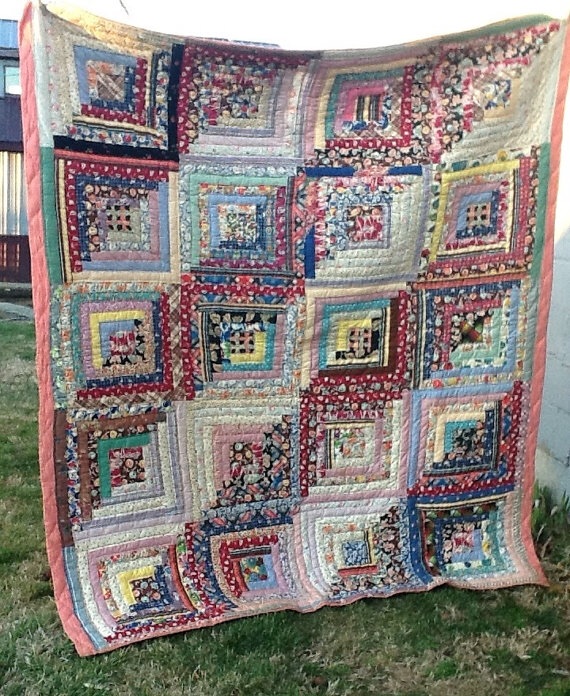
Don’t She Look Natural

Aunt Ellie's Funeral
My mother was raised during The Great Depression. This is her story and illustration of her Aunt Ellie’s funeral.

The events surrounding Aunt Ellie’s death were a real treat for me since the two of us hadn’t invested much affection in each other. The wake was unforgettable with all its glorious food: fried chicken, peach cobbler, deviled eggs, bread ‘n butter pickles, dainties not seen outside “dinner on the grounds.” Sprinkled with carbolic acid, Aunt Ellie lay in a pine box stretched across two sawhorses in our living room. Folks tiptoed through, speaking in reverent whispers, “Don’t she look natural?” and “Ain’t she purty?”

Luckily for me, Mama couldn’t read minds or I’d have been eating standing up the next couple of weeks. She might ‘a been purty a hunnerd years ago, but I hadn’t never seen nothing “purty” ‘bout ‘er, bony and wrinkled as a prune, ol’ dry snuff ‘round ‘er mouth” Her ol’ crazy hair stuck up like a nest ‘a sting worms. She’d a skeert a person to death had if they’d ‘a met ‘er in the dark. Least she smells better dead.’

All the family came. The men sat with the body round the clock to protect it from the horror of desecration by varmints or house cats. Women-folk bustled in the kitchen, initially sharing woeful tales of death and illness, before branching off into ever-lasting business of child-bearing. New brides and rosily pregnant young wives studied snaggle-toothed old women, either dried-up and stick-thin, or walking barrels with pancake breasts hanging to their waists sure, they could have never been young or pretty enough to catch a man’s eye. In return, they were rewarded with horrifying tales of five-day labors and gruesome deformities, enough nightmares for the rest of their pregnancies. Folk sat around talking and parents weren’t quite as likely to run kids outdoors. Perhaps “not speaking ill of the dead” relaxed the old standby “children should be seen and not heard.” Old family stories were dusted off and embellished for the new generation. The best storytellers theatrically saved their best till the moment was right: Grampa Holdaway and his starving buddies roasting an unfortunate turtle over a campfire as they were marched to a Union Prison Camp in Illinois; Uncle George gored by a stampeding Longhorn cow; Daddy and Uncle Jim tossing cats and dogs off the roof of the Primitive Baptist Church during revival, making folks think the rapture had come. Kids hung on every word, never realizing their own great-grandchildren would beg for these same stories long after their ancestors were dust.

Ah, the funeral! Up till now, though I’d attended dozens, I’d never enjoyed the prestige of being a “member of the family,” though I knew the order of the funeral service by heart. The dearly departed lay in state on altar, surrounded by all the flowers the community could heap on them. The front pews were saved for “the family”, their grief showcased to best advantage. All eyes followed as they somberly took their places in the seats of honor. Strong men supported those most devastated, either by love or guilt, a topic of open debate by attendees. Following a eulogy so lovely the honoree couldn’t have recognized him or herself, the saddest hymns known to Christendom, and exhortations for the lost to mend their sinful ways. Next, the community filed by to pay their last respects, ostensibly leaving the family to their last private moments with their loved one. In fact, many intrigued guests filed back in and took their seats to see how the family “took it”, noting every utterance, cry, or wail to interpret at leisure for those unfortunate enough not to have made it to the entertainment. With any luck, mourners shrieked, fainted, rent their clothes, climbed in the coffin, confessed their sins to the corpse, or just generally made it worth the time it took to go to a funeral. Just once, I’d tried to join the line that circled back to see “how they took it” but Mama convinced me not to try that again. She usually towed me out the door to the home of the mourners to red up for the after funeral dinner and often left as soon as the family got back without even a bite of the luscious fried chicken or a crumb of chocolate cake. ‘Boy!! Was Mama mean!!’

Finally, finally, I was a fully qualified mourner, a member of the family, entitled to a front pew. Of course, Cousin Katie got the seat of honor, with that mean Johnny, right next to her. Daddy, Aunt Ellie’s only living brother was next to Johnny, then Mama, where she had a straight shot at me and John if we even looked like we might wiggle. For as long as I could remember, Margaret Lucille, the preacher’s little girl and Sarah Nell Bond had run up and down the aisles during church services as much as they pleased. Sometimes their mamas sat together and the girls giggled and played together, digging in their Mama’s purses till they were separated. Then they’d put their heads in their mama’s laps and go to sleep, showing everybody their bloomers. I’d always admired them, and one Sunday morning worked my nerve up to join them. As I leaned forward to slip off the pew, I felt a fearsome presence next to me and an iron grip on my arm. I looked up and Mama pinned me to the pew with a deadly look, shook her finger, and hoarsely threatened, “MAY YOU BUH!” I was never foolish enough to rock the boat to later to ask what “MAY YOU BUH!” meant, but it had to be terrible. . I’d never tried to roam during church again, but Mama still didn’t trust me. Years later,when I got the nerve to ask Mama what that fearsome phrase “May you buh!” meant she had no idea what she might have really been saying.

Sitting still throughout the long church service was usually torment, but today I made the most of being “a bereaved family member” and concentrated on looking sad and pale. I considered trying to faint but figured Mama would warm my britches up for me if I messed it up. I’d never kissed Aunt Ellie when she was alive with snuff in the wrinkles around her mouth and wasn’t about to start now, even if it would make a good impression. ‘That was just creepy.’ I hoped the neighbors didn’t notice how much Cousin Katie looked like a purple eggplant as she stood before the coffin, supported by my poor, skinny daddy. I caught my breath when Katie leaned over coffin to kiss Aunt Ellie. Thank Goodness, she didn’t flop like a fish in front of the coffin like a fish, thrilling the neighbors. I’d always enjoyed watching other people clown around at funerals, but didn’t want people poking fun at my family.

After the service, folks filed out to the cemetery for the graveside service, usually an anticlimactic postscript to the funeral: a brief message, a sad hymn or two, and a prayer, but today, Margaret Lucille livened things up a bit. She’d brought her beautiful colored baby-doll along for company, and decided to conduct a funeral of her own off to the side. As always, her parents pointedly ignored her behavior. I seemed to be the only one who noticed. Margaret Lucille dug a little hole in the soft sand nearby, buried her doll and sang along with Aunt Ellie’s service. In fact, she enjoyed the singing so much, she kept right on singing after everyone else was through. Her song only had one verse and no apparent tune. The longer she sang, the louder she got. Her daddy, Brother Sanders went right on with Aunt Ellie’s service, patiently raising his voice to be heard over Margaret Lucille’s caterwauling. Not to be outdone, she sang louder. Each time he raised his voice; she sang ever louder. After a few competing rounds, Brother Sanders gave up and concluded his service as Margaret Lucille enthusiastically sang on.

“OH! My poor little baby’s dead.

My poor little baby’s dead.

I ain’t never gonna see my pore little baby

No more! No more! No more!

As the service ended and mourners filed away from the grave, I looked backed, hoping Margaret Lucille had left the doll buried, planning a grave robbery. No such luck. That baby came straight out of the ground and went home with her. Of course, Mama dragged me home with her as soon as the funeral was over. That night in bed, the two funerals, Aunt Ellie’s and the beautiful colored baby doll’s replayed in my mind till I went to sleep. Even though I knew I’d seen Margaret Lucille disinter and reclaim her baby doll, I still had to go back to the cemetery first thing the next morning and check to be sure. I wasn’t concerned about Aunt Ellie.

The Threat of Typhoid Tomatoes

This is a story from my mother’s childhood.
R G Holdaway Family with Johnny Bell early 1930's

Mama kept me close to her side we when were home alone. If she did let me go in the yard on my own, I had to be close enough to come running in an instant when she called. The only exception was a trip to the toilet. Since it wasn’t polite to answer from the toilet, I kept quiet knowing, she’d be watching for me to come out before mounting a search. She always warned me against falling through the hole in the seat, but that was a concern she could have spared herself. I’d have sprouted wings and flown had I felt myself falling into the quagmire beneath that toilet seat!!

A well-worn path led down the hill to the toilet located far enough to cut the odor and avoid contamination of our well. Mama was vigilant about sanitation and shoveled lime into the pit to aid decomposition and screened the open back to foil her chickens who considered the flies and maggots a tempting buffet. Chickens are not known for their discriminating tastes. Any chicken Mama planned to butcher, was penned up and fed a fine diet of grain and table scraps for several days prior to its date with the axe, till Mama was convinced it, “clean.” I now realize my brother didn’t bother with the long walk to the toilet at night, since a healthy crop of tomatoes had volunteered beneath his bedroom window. Mama noted the size and beauty of the crop, but said we couldn’t eat them. “They might not be clean.” They looked as “clean” as the ones from the garden, so John and I slipped off and enjoyed the finest tomatoes of the season, which had apparently benefitted from the trip through his digestive system. When Mama noticed the stripped plants, she whirled around and quizzed me “What happened to those tomatoes? You didn’t eat them did you?” My guilty look gave me away. “You did, didn’t you? Oh, My Lord, you could get typhoid from those nasty tomatoes.”

My heart fell. I knew this had to be serious since Mama said, “Oh, My, Lord!” I had no idea what typhoid was, but I did understand I was about to die.

“John ate most of them. I only ate a couple of little ones but nothing was wrong with them. They tasted real good.”

“Being raised in filth wouldn’t make them taste bad. They could still make you sick.” She went on about her business as I prepared to die.

I worked up my nerve. “Mama, will typhoid kill you?”

“It could, but maybe you won’t get it. I had typhoid when you were a baby and nearly died.” I already had a keen conscience and knew I deserved punishment as I waited anxiously all afternoon for typhoid to strike me down. I attributed everything to typhoid: a ringing in my ears, a rapid heartbeat, feeling hot and thirsty as I played listlessly in the shade that July afternoon. My last day dragged. Mama didn’t say any more about typhoid, but I knew it was only a matter of time. I dreaded going to bed that night since I wouldn’t be waking up tomorrow, but certainly couldn’t confide in Mama, since I’d brought all this on myself. During bedtime prayers, I got cold shivers reciting the line, “and if I die before I wake, I pray the Lord my soul to take.” Knowing tonight would be the night put a whole new light on the situation, especially since I’d disobeyed Mama. It hurt my feelings a little when she tucked me in as matter-of-factly as usual on my last night on earth. I fought sleep, but couldn’t hold it off forever. I bounded out of bed, thrilled to find myself alive and ravenous when I awoke and smelled dry-salt meat frying, biscuits baking, and coffee percolating before daylight the next morning. Typhoid would have to wait for another day!

Feed Sack Dresses

image image image image image image image image image imageClothing made from feed sacks was a great boon to the economy of the cash-strapped depression.  Farm wives eagerly collected and traded these pretty printed bags.  Three would make a nice ladies dress, provided the skirt was not too full.  Two would make a short-sleeved shirt for a man when plaids and stripes came in.  My mother was born deep in The Great Depression and remembers her mother showing the store-owner a scrap and asking him to  “Try to get me one more of this nice rose print if any come in.”  Crisply starched and ironed, they made sturdy, attractive dresses.  Fading was a problem.  Hems were deep so they could be let down.  Her mother frequently used rick-rack to conceal the fade line when the hem was dropped.  The tie belts at the waist made it possible to adjust for longer wear.

Underwear was made from the soft cotton flour bags.  As often as not, my grandmother used strips of rubber cut from inner tubes for elastic.  It was not unknown for the rubber to snap and bloomers drop to the floor, humiliating the wearer and delighting onlookers.  Fabric remnants went into a scrap bag to be made into patchwork quilts.

Musings on My Father, on His Birthday (Part 1)

parents wedding pic

Bill and Kathleen Swain’s Wedding Picture, June 29,1945

family3   My father and some of his siblings.  He is the small boy with the wet pants holding his cap.

If my father had lived, he’d be ninety-one today.  I’ve been thinking about him all day.  He was born to share-croppers during the deepest of The Great Depression.  He was shaped by it, just like everyone else.  He was fourth of seven children.  His father died young, leaving a widow and three young girls still at home.  Bill was thirteen and never really lived at home again.  He worked and lived wherever he could for something to eat and maybe a little something to bring home to his mother and the three sisters left at home.  He said he worked a whole day chopping bushes in the winter rain one for a five-pound bag of meal.  He spent a lot of time at his Uncle Albert’s home.  Though Uncle Albert wasn’t always kind, he always provided him a home and something to eat when Daddy showed up.

He was over six feet tall at fifteen, and passing for seventeen, got his first job for the public, as a watchman at a drill rig.  It wasn’t far from his mother’s house, and sometimes he’d slip home to get something to eat.  His older brother got him on as a greaser in the oilfield soon afterward.

He joined the Navy at seventeen at the start of World War II, knowing he’d be drafted, choosing the Navy because he heard they got regular meals.  He never intended to be hungry again if he could help it.

Upon discharge from the Navy, he joined a construction crew running heavy equipment, and met and married my mother in East Texas.  They barely knew each other. Before long, they moved back to Northwest Louisiana, where he got on at International Paper Company and worked thirty-five years.

I knew my father as a driven, difficult man.  He was very loving to us when we were younger, but didn’t deal well with older children.  He made it clear he preferred having our “respect” than “love.”  I don’t think he understood he could have had both. I loved him dearly as a small child, but he wasn’t comfortable with girls and distanced himself from his girls as we grew older, thinking we were Mother’s responsibility then.

Daddy bought remote, unimproved acreage to build a cattle farm in my early teen years.  I thought that was wonderful till I learned the reality of what that entailed.  The place hadn’t been farmed in decades.  The house place under three huge oaks was overgrown in a locust thicket.   Locusts bushes are covered in long, sharp thorns, almost as hard as iron.  We had to help clear that thicket, pile it and burn it before the slab for the house could be poured.  Many times one of us stepped on a locust thorn and had it pierce our shoe and go into our foot,  sometimes more than an inch deep.  When you pulled it out, the tip was left to get infected and fester for days before it swelled and shot out in a purulent core.   The process was hurried along by soaking the pierced foot in hot salt water.  I don’t think any of us ever went to the doctor; it was such a common problem. We learned to dread those locust thorns.  For several years after we moved there, those locust thorns would turn up in our feet.   (to be continued)

My Dead Aunts Coat ( from Memoirs of The Great Depression)

imageNot long after Aunt Ellie’s funeral, Cousin Katie brought her faded, old plum-colored coat to Mama.  “Mr. Blizzard bought this for Aunt Ellie years ago.  The material is real good.  It won’t fit me. Do you want to make it over for one of your girls?

“I sure do.  The cuffs on Kathleen’s coat are over her wrists.  I ‘ve been trying to figure out how I could come up with some heavy material.  This should do good, if you’re sure you can’t use it.”

That caught my attention. I hated that camphor-smelling old coat.  I’d seen skinny, old Aunt Ellie wrapped up head to ankles in that faded old coat, puttering around in the yard or sitting wrapped in it next to the stove on cold days.  The front was spotted and the cuffs slick with age and wear.  I imagined myself creeping around in that worn-out coat, looking just like Aunt Ellie, my white hair wound in a wild bun, like Aunt Ellie’s. A string of mean kids would be following me, pointing and laughing at the poor, pitiful kid in the raggedy, old dead-lady coat.

“Mama, I don’t want Aunt Ellie’s old coat.  The kids at school will laugh at me for wearing an old dead-lady’s coat.”

“Now Kathleen, this material is too good to throw away, and you need a coat.  That’s all there is to it.  When I’m through making it over, nobody will ever know it’s not ordered from Sears and Roebuck.”    She immediately pulled out the catalog to have me choose a style so she could cut a pattern.  Glumly. I pointed a coat out, knowing I was defeated.

I pushed the coat from my mind, though periodically, I’d come through to find Mama cutting the fabric, brushing it with cleaning fluid.  Though I had no interest in the process, she later told me she cut the coat apart, turned it, cleaned and reblocked, before finally pinning on her custom fitted pattern.  Truly, the reverse side of the fabric was a rich rose.  Stitching it and the freshly cleaned lining together, Mama polished it off with a new collar.  New buttons completed her masterpiece.  It looked nothing like Aunt Ellies’s faded old coat.  No one would ever recognize it!

I hated it!  Mama made me put it on and model it for her and Daddy.  I knew better than to complain.  On the first cold day, Mama made sure I wore my new, old coat.  Ashamed, I rushed to hang it in the cloak room as soon as I got to school.  At recess, I hung behind to put my coat on, hoping no one would remark on it.  I hid around the corner, hoping to avoid humiliation.  At lunch, Berenice and Christine admired my coat in passing, before moving on to a more interesting subject.  I was pleased but almost disappointed after I’d thought it so ugly.  In truth, it was a very nice coat, cut in a stylish pattern, but you’d never have convinced me.  The whole time I wore that hateful coat, I kept waiting for my shameful secret to be discovered.

Are You Hungry?

gravyThat was the first question Daddy asked every person who entered his house, should they be a friend, relative, or Kirby Vacuum Cleaner Salesman who happened to be hopelessly lost on the back roads of rural Bossier Parish.  Raised during The Great Depression, always hungry, he frequently did a day’s work for no more than food.  He swore if he ever got grown, no one would ever leave his house hungry.  “Are you hungry?  Kathleen will fix you something to eat!”   The burden of his good intentions Continue reading

Turned Out In The Cold

imageUncle Joe sent word he needed the boys to cut firewood one November day in 1934.  He’d be ready about ten the next morning.  They walked barefoot three miles through the woods, kicking at the fallen leaves, since it was a still a warm day as November often is in Nortwest Louisiana.  Shoes had to be saved for school, but the opportunity to get a day’s work took precedence over school.  They needed whatever Uncle Joe paid, whether it be a little money or food.  Maybe they’d get a meal or some cast off clothes, too. Continue reading

People Ought Not to Have to Live That Way

imageAfter his father died , Daddy told of his family moving in a battered old shack sitting in a open field occupied by a bull and herd of cows.  It was really not much better than a barn, just unpainted planks with unfinished walls inside, tin roof visible above the open rafters. The  cows offered little threat, but the Jersey bull raged when the cows were in heat.  Mettie and the kids had to always had to keep a look out for him when they stepped outdoors to do laundry or fetch water from the well.  Mettie kept the little girls close by in case they had to make a run for the house.  She and the older boys made sure he was nowhere around before starting across the open field to the road. Continue reading

My Dad’s Early History

family3Back row Unknown 2nd Geneva,Edward, 1st Bill, Bessie Swain.

Bill Swain, my dad was born in 1924, fourth of seven children born to Eddie and Mettie Swain.  Eddie’s father, Thomas Swain owned a blacksmith and farm and was fairly prosperous.  His business was lost during the depression.  As he lay on his deathbed, in his delirium, he kept telling  his family he had hidden money under his bed.  None was ever found.  Poverty-stricken like so many others, Eddie made his way as a sharecropper,  moving farm to farm, hoping for greater opportunity.

Sadly for the family, Eddie died after four years of suffering with a brain tumor, leaving Mettie with five children under sixteen.  Much of the last couple of years, Eddie was either hospitalized at the Confederate Memorial Hospital in Shreveport, Louisiana, or in his mother’s care at her home.  His mother was willing to care for Eddie when he needed her, but did nothing for Mettie or the children.  The only help Mettie could count on was from her brother.  Brother Albert provided her a house and garden place on his farm when she wanted it.  Mettie was restless, sometimes moving away.   Bill was thirteen when his father died, Edward, sixteen.  Both boys had already taken to working away from home, more for something to eat than money.  They knew they needed to “get their feet out from under Mama’s table.”  If they didn’t havea place to live and work, they’d take a day’s work at a time, for what they were fed the day, or if they were lucky, a bag of meal, a half-bushel of beans, or some corn to bring home.  Bill lived most of the time with his Uncle Albert, taking work on other farms as well when he could get it.

Bill snagged his first paying job at fifteen as night-watchman on a drilling rig.  He was big for his age, able to pass for eighteen.  The site wasn’t too far from home.  He get hungry and slip home nights for something to eat.  From there, he went on to construction and operating heavy equipment, which he did till he went in the Navy during World War II.  He enlisted in the Navy, because he never wanted to be hungry again.

to be continued