The Quirky Dining Adventures of My 96-Year-Old Mother

I am running a series I originally did in 2016.   Just so you know, Mother is thriving at ninet-six.

Mother is ninety-something years old and enjoys the health and enthusiasm of a ten-year-old, with a few added quirks. Let me preface this by assuring you, I don’t mean her mind is going. She hasn’t changed in all the years I’ve had the great fortune to know her. Also, I am not complaining about her, just passing on a few things I’ve learned a person will experience should they spend a little time with her.

Lunch out with Mother always starts with an understanding. I understand I will be paying unless she tells me otherwise ahead of time. Let me give you a little background. She is a tightwad. When we stop for a cup of coffee, she always holds her little yellow change purse where I can’t see it, pretends she has no change, even though it’s bulging, and asks, “Can you pay for my coffee? I hate to break a dollar for coffee.” Technically, this is true. She never said she didn’t have change. She just hates to break a dollar for coffee. If we went to a car dealership, she’d say, “Can you get this. I hate to write a check for a car.”

First of all, bathrooms are a priority at every stop. In the name of good hygiene, a bathroom visit is the first order of business at a restaurant. Handwashing before a meal is a laudable practice. As soon as we get in line for a table, or are seated, Mother makes a bee-line for the bathroom. This is not out of the norm. The minimal bathroom visit is thirteen minutes. This includes waiting in line, stepping back for anyone in distress or with children, conversation with other bathroom goers, and meditation and stall inspection time. Then she has get in line to soap, wash, dry, and inspect her hands,face, teeth, and general appearance before leaving. It goes without saying, she steps out of line at any opportunity, giving up her spot to any and all, in the name of kindness. (Kindness to the public, not her party) Eventually, she rejoins her party at the table, after we have put the server off a time or two.

As often as not, we’ve already ordered beverages, which include an iced tea for her. This implies someone else will be picking up the tab for lunch, since Mother has no intention of ordering tea. “It’s too expensive. I’ll have tea at home.”
She peruses the menu while regaling us with tales of those she observed or became acquainted with in the restroom or enroute back to the table, fascinating fare. I am not kidding. She has come back with people’s life history, including tales of running away with the circus, being born with an identical twin incarcerated in one’s body, to miraculous spontaneous cancer cures. I have no idea how she elicits these stories. Eventually, she chooses her choice of the chicken and vegetable offerings of the day, to the relief of the server, and turns her attention to the other diners.
There’s always a story. She sees someone she knows, someone who looks interesting, or someone who reminds her of her Cousin Kathleen from Virginia, and she’s off. “Remember how Cousin Kathleen always shut everything down to listen to her “bituaries” (obituaries) on the radio, and was so full of stories about all the dead people? She knew all the recent and ancient gossip on everybody and resurrected it when their obituary aired.” Cousin Kathleen did know a lot of great stories. It was interesting to hear about the spicy pasts of her octogenarian neighbors, proving there’s definitely nothing new under the sun.

Mother enjoys her food, and is a slow eater. I usually finish my meal and have dawdled over two or three glasses of tea by the time we let the server know Mother needs a takeout box. She loads it up with her leftovers, and anything left on our plates, eventually rounding up enough for two or three meals at home. “If you’re not going to eat that chicken, I’ll put in my takeout box…and if you don’t want the rest of your salad, and that roll……..”
By this time, someone in the group has confessed that they will pick up her tab, though she protests unconvincingly, just for the sake of good manners. She was “raised right.”

Mother disappears to the bathroom for her post-prandial visit, “as long as we had to wait for the check.” The check came while she was gone. She came back, totally surprised to find me paying check. “I didn’t know the check would come so soon. I’ll pay you back later…….
It’s always easy to tell I am supposed to pick up her ticket. If she intends to pay, she lets me know before getting to the restaurant. “Now don’t try to pick up my ticket. I’m paying my own today.” This usually happens when it’s her trip to the doctor or her special errand. I am content to pay for her meals forever, it’s such a pleasure to still have her company.

Quite often, a stranger, usually a man in his sixties or seventies from a nearby table insists on buying her lunch, just because they’ve enjoyed overhearing her conversation at lunch, often saying she sounds like their mama. They were “raised right.”
Another trip to the bathroom is in order before we hit the road. Another thirteen minutes, while I pay the tab and keep up with her takeout box. Finally, torn from the bosom of all her new friends, ready for the next step. ………..To be continued

Spilt Milk, Broken Dishes, and Trashy Girls

Spilt milk or broken dishes were reason a’plenty to cry when I was a kid. Daddy was highly volatile. Nothing shattered his nerves like a broken dish. Life with him was like walking a delicate precipice. Catastrope could strike without provocation: milk spilled at breakfast, the crash of shattered glass, the shrill shriek of a child. Even when things were going their best, any startling or embarrassing incident could end in a conflagration with Daddy taking his belt to the unfortunate instigator and descending into an anger that could last for days. Early on, we all learned we needed to keep Daddy happy. He doted on babies and toddlers, but rowdy children with opinions and boisterous behavior easily triggered his thunderous disapproval. Talking too much was a sure way to blunder into trouble. I invariably repeated a joke or word I didn’t understand, much to my sorrow. Failure to be circumspect ensured punishment. Nothing triggered him faster than shame. He intended for his children to reflect well, never subject to the possibility of criticism, justified or not. He only had to suspect a behavioral rule for modest female behavior to exist for it to become law. For us older girls, that meant no shorts, no public swimming, no dancing, no talking to boys, or dating until sixteen. Fortunately for my younger sisters, the road to Hell was not so broad. The worst thing we could have done was “trashy” behavior, namely promiscuity. Drinking and smoking were too far beyond the pale to ever enter the conversation.

“Trashy” girls ran around with wild boys, smoked, drank, danced, skipped school, cursed, talked back, and of course, had sex. It was understood they were an abomination not to be tolerated. I had cousins who were “trashy” long before I knew the specifics of what it involved. I just knew Cousin Carly’s boyfriend honked the horn at the street. She ran right past my shouting aunt, jumped in the car, and the boy spun out. She stayed out late, smoked cigarettes, slipped out when grounded. She got a speeding ticket driving her boyfriend’s car sixty miles from home on a school day. There was no way this way going to end up any way but badly. Of course, she dropped out of high school.

Not long afterward, Aunt Lou announced Carly had married an Air Force guy. Nobody ever saw him. Carly had a baby. Aunt Lou went to the Air Force Base and got Carly a divorce one day while Carly was working at the Firestone Plant. Carly couldn’t get the day off. Shortly thereafter, Carly married Phil, had two more children, and became as dull as mud. Thereafter, her life was entirely unremarkable except for the excellent example of how “trashy” girls behave. Thank you, Carly.

I Will Never Complain About My Job Again

image image image image image image image image image image image image image

Smoke, Smoke, Smoke that Cigarette

      Daddy smoked Camel Cigarettes when I was a kid.  Men smoked and Real Men smoked Camels, not one of those sissified menthol filtered brands.  Only trashy women smoked.  Mother did have one lady friend who smoked, but Miss Frannie also wore shorts and didn’t go to church.  I thought there had to be some relationship between those three big sins, but loved going to Miss Frannie’s house, so I hoped Mother continued to overlook her failings.  Miss Frannie’s husband hunted with Daddy, so the families’ friendship held fast.

    It was manly to smoke, but like drinking coffee, it was a pleasure delayed till adulthood.  I hated it when Daddy smoked, especially in the car.  We’d all be packed in tight in the backseat and as soon as he backed out, Daddy lit that cigarette.  The smoke burned my eyes and made my throat sore.  It wasn’t so bad in summer with the windows down, but in winter, we were trapped.  Daddy opened his side window vent, so in theory, the smoke didn’t stay in.  The actuality was that we all breathed second-hand smoke the whole trip.

            My smoking experience lasted two puffs.  Daddy told me to toss his cigarette in the toilet, and I took two brief puffs as I walked toward the bathroom. I did enjoy the sizzle as the cigarette hit the water, though. My cousin said he smelled smoke on me and I never tried it again.  Something about putting fire in my mouth never appealed to me.  It held about as much appeal as poking a stick in my eye.

            Daddy started smoking at fourteen or fifteen and often said he wished he’d never started, but never tried to quit.  My brother Billy and a cousin swiped some of Daddy’s cigarettes and gave smoking a whirl.  They hid in a ditch and were smoking away when a neighbor kid came by and ratted them out.  Daddy gave them a lesson in smoking, something that would get him jailed now.  He invited them come sit and smoke with him.  They were in high spirits and joined him happily.  He insisted they inhale so they’d get the full effect.  They were sick long before they’d gotten through that first cigarette, wanting to quit.

He reminded them they’d wanted to smoke and insisted they continue.  In just minutes they were drooling and starting to vomit.  Making them take a few more puffs, they had to endure a lecture on smoking, with a reminder to check back with him next time they wanted a cigarette, he’d be glad to smoke with them.  They both held off for a while, but eventually found their way back to smoking.  Thankfully, my brother quit before long.  My cousin died of tobacco-related disease in his late forties.  Daddy put his cigarettes when he was in his forties.  My mother never smoked a cigarette in her life, but due to living her first thirty-six years with heavy smokers, has a moderate degree of lung disease today.

I hesitated to write this story, but it illustrates well how things were handled in the past.  I’m sure in later life, Daddy would have never done this, but in his thirties, he still had a lot to learn about life, as we all do.


Home Perms Run Amuk

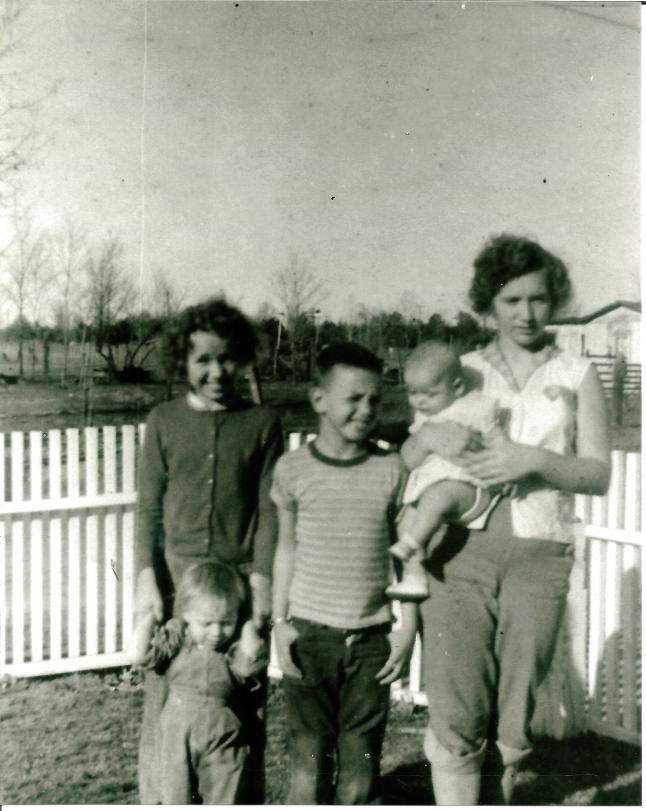
Five kidsI have enjoyed blogging so much this past year and a half.  I have met so many friends and enjoyed incredible writing.  Following Bunkarydo’s example, I am reposting my first post. Pictured above:  upper left Linda Swain Bethea holding Connie Swain Miller’s hands, Billy Swain, Phyllis Swain Barrington holding Marilyn Swain Grisham.

To curly-haired people Mother might have seemed mild-mannered enough, but beneath her calm exterior she nursed a sadistic streak, committing home permanents with malice aforethought, ignoring her helpless daughters’ protests that “I like my hair this way.” and “nobody but old ladies have THAT kind of hair.” squashing arguments with a terrifying directive, “Don’t dispute my word.” “Disputing my word” assured swift and terrible punishment, followed by a furious lecture about how great we had it and ending tearfully with, “and I would have given anything to have a permanent wave like Margaret Lucille, but I had to wear my hair chopped off straight around.” Had I met Margaret Lucille, the author of my misery, I would have gladly pulled out every permanently-waved hair on her despicable head. I hated her than Mother.

Around July 4th every summer, Mother would casually start to dangle the threat that she had to give us a permanent before school started. We’d protest vainly against her response that “She wasn’t going to look at that long, stringy hair all year.” A procrastinator, Mother didn’t get to the evil deed right away. Just before Labor Day, when the humiliation of last year’s perm had grown out enough to be approaching normalcy, Mother would stretch her budget to include a home permanent for each of us. I would have been grateful for cyanide when she dragged out those hateful pink and white “Lilt” boxes. After a long night of dreading the inevitable, Mother got us up early to clean the house so she could start the long perming process. I dragged over to borrow the pink curlers from Miss Joyce, the next door neighbor, hoping to be hit by a truck. When I got back home, defeated, I surrendered to my frizzy fate. Mother seated me on a kitchen chair and cut my hair, using her time-honored secret for a perfect hairdo. She methodically divided my luscious locks (my description, not hers)into sections, started at the bottom, and held up about fifty hairs at a time, measured them against a mark she’d made on a rat-tail comb, and cut. My mood became increasingly glum as she measured and cut, measured and cut.

After an interminable period, I was ready for the next step. Mother opened the home permanent kit and mixed the deadly chemicals, assaulting the senses with the sulfurous scent of rotten eggs and a healthy touch of essence of pee. Dividing what remained of my hair into tiny sections, wetting it with putrid permanent solution, she wrapped it in papers, and wound it as tight as possible on the hard pink plastic curlers. If my eyes weren’t popping out enough, she’d rewind. Once this misery was accomplished, she sent me on to enjoy the rest of the day, anticipating the frizzy mess I could expect tomorrow, and got to work on my sister’s hair. I tried to stay out of sight to avoid being ridiculed by the neighbor kids.

After trouble and expense of inflicting a perm on us, Mother made us leave the hard plastic curlers in overnight, fearing an early release might let the curl “fall out.” My fine hair was no match for the perm solution, and I was never fortunate enough for my curl to “fall out.” I was glad to get the curlers out the next morning, but dreaded the reveal of the “fried, frizzy, old lady hairdo.” I was never disappointed. Mother took the perm curlers out and we all looked like Brillo Pads. When we complained about how horrible it looked, Mother assured us it would be fine after we rolled it. That just postponed the disaster. When the brush rollers and hair pens came out at the end of the day, it was always even worse than I remembered from the year before. I wanted to die. Mother always tried to cheer us up by saying, “The frizz will wear off in about a week.” When we weren’t cheered by that, she offered the cold comfort, “Well, it will always grow back. Now, dry up.I’ve heard enough!”  I still don’t think she’s heard nearly enough.  There should not be a statute of limitations on those who abuse helpless children with home-perms.

She worked herself into a self-righteous frenzy of pity when we refused to be grateful for the torture she’d inflicted on us just to ensure we’d be social outcasts for another year. We always went back to school with a frizzy mess, looking we’d escaped from an insane granny cult. The fact that my sisters shared my fate did nothing to cheer me. Who wants to look like that bunch of freaks?

Image

If You Hate Your Job………

image

Feed Sack Dresses

image image image image image image image image image imageClothing made from feed sacks was a great boon to the economy of the cash-strapped depression.  Farm wives eagerly collected and traded these pretty printed bags.  Three would make a nice ladies dress, provided the skirt was not too full.  Two would make a short-sleeved shirt for a man when plaids and stripes came in.  My mother was born deep in The Great Depression and remembers her mother showing the store-owner a scrap and asking him to  “Try to get me one more of this nice rose print if any come in.”  Crisply starched and ironed, they made sturdy, attractive dresses.  Fading was a problem.  Hems were deep so they could be let down.  Her mother frequently used rick-rack to conceal the fade line when the hem was dropped.  The tie belts at the waist made it possible to adjust for longer wear.

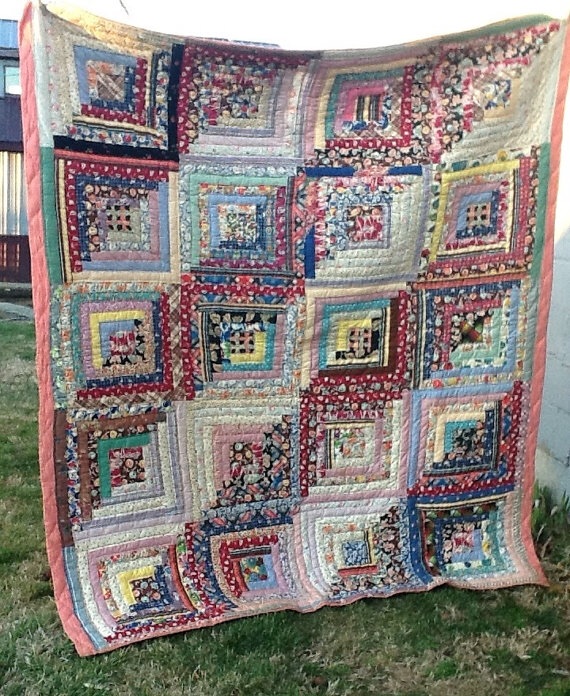
Underwear was made from the soft cotton flour bags.  As often as not, my grandmother used strips of rubber cut from inner tubes for elastic.  It was not unknown for the rubber to snap and bloomers drop to the floor, humiliating the wearer and delighting onlookers.  Fabric remnants went into a scrap bag to be made into patchwork quilts.

Ask Auntie Linda, Straight Talk From a Straight Shooter

Auntie LindaDear Auntie Linda, I have a dilemma.  My divorced, 34-year-old daughter, Gwen asked me to help move her and her three children to more than five hundred miles to California where she had taken a job as an apartment manager.  When we got to the address, Gwennie ‘fessed up that she was there to marry a 21 year old man she’d met online.  Of course, I was furious.  The man was shocked to find out about the three children.  I tried to talk Gwennie out of staying, but she was adamant.  Thank goodness, the children wanted no part of it and we left for home immediately.  Gwennie refused my calls for two weeks.  I got a call from her yesterday.  She is staying at a women’s shelter and wants me to send money for plane fare home.  I don’t have an extra dollar.  I would have to sell my car to raise plane fare and then I couldn’t get to work.  My thirteen-year-old granddaughter is looking after the two little ones since I can’t even afford a babysitter.  I wouldn’t be able to feed them without help from the foodbank and church.

Gwennie has always been a pathological liar.  I have no confidence that she is truthful now.  Am I wrong to refuse to help?  Worn out with Gwennie

Dear Worn out, Sounds like a good time for Gwennie to learn to manage for herself, especially since she is not believable.  If she is in a womens shelter, she should avail herself of their services.  You have your hands full caring for Gwennie’s children.  Your first responsibility is to them.  You might consider seeing if Children’s Service can offer you any financial help since their mother is out of the picture.  They may be eligible for benefits as dependent children.

Dear Auntie Linda, My husband’s sister Trudy is ten years older than I.  Neither she nor my mother-in-law has ever accepted me nor welcomed me to the family.  This year, Trudy gave me a sweater she claimed was hand-knitted for Christmas.  When I got home I found a manufacturer’s label in it.  She is self-righteous and critical of me, often snidely pointing out my inadequacies as a wife, mother, and housekeeper, saying, “This is how our family always does things.”  Should I mention that I found the label on the sweater?  It might shut her up.  My husband wants me to let it go in the name of peace, but I’d like her to know I know.  What should I do?  Snubbed

Dear Snubbed, Maybe you should wear it next time you see her and leave it where she can’t avoid seeing label.  Things like that happen sometimes when you are a little untidy.  Auntie Linda

If You Notice Someone With A Black Dot On The Palm, Call The Police!

Please read this

Angel4Light's avatarAngel 4 Light

If you ever see a person that has a black dot on the palm, you should call the police immediately. The black dot means that the person is in trouble. –

“Black Dot Campaign” started on Facebook and it’s a campaign to recognize the victims of domestic abuse. That simple black dot on their hand signifies a call for help.
Black Dot Campaign
By putting a black dot on their palms, victims of domestic violence can show that they’re in danger. So if you ever notice a person with a black dot on his/her palm, help this person and call the police.
“The black dot on the hand lets professionals know you’re a really vulnerable domestic violence survivor, and that you need help but can’t ask because your abuser is watching your every move. In just 24 hours, the campaign has reached over 6,000 people worldwide, and has already helped…

View original post 177 more words